
Basic Safety Certificate (BSC) for All Seafarers
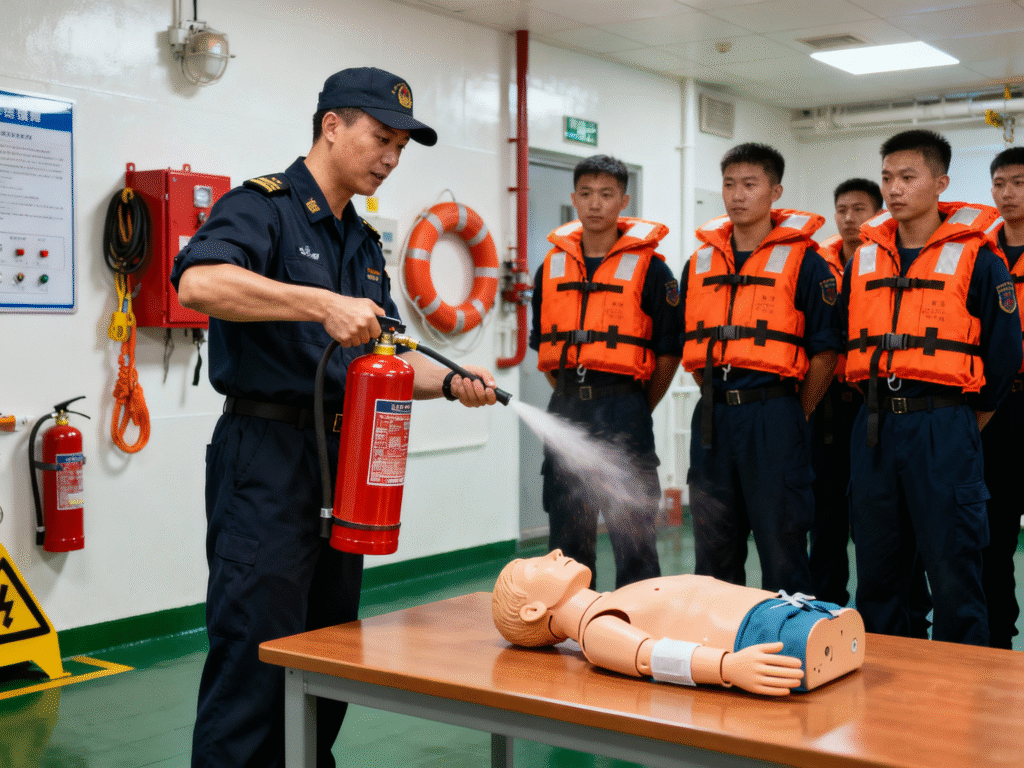
The Basic Safety Certificate (BSC) is one of the most essential documents for working on board any type of vessel. It confirms that the seafarer has acquired the basic skills and knowledge required for safety on board.
This certificate is mandatory for every seafarer under the requirements of the International Convention on Standards of Training, Certification and Watchkeeping for Seafarers (STCW). The course is developed in accordance with the requirements of:
· The STCW-78 Convention as amended, taking into account Resolution MSC.560(108), where the course program includes a mandatory module on the prevention of violence, harassment, bullying, and sexual assault (SASH — Sexual Assault and Sexual Harassment);
· Regulation VI/1 and Section A-VI/1 of the STCW Code;
· IMO Model Course recommendations 1.19 (Personal Survival Techniques), 1.20 (Fire Prevention and Basic Fire Fighting), 1.13 (Elementary First Aid), and 1.21 (Personal Safety and Social Responsibilities).
What is a BSC Certificate?
The Basic Safety Certificate is required for every crew member on international vessels. It is also necessary to obtain a seafarer's passport. The certificate is required for work on passenger ships and tankers, it is one of the basic documents for a seafarer.
BSC confirms that a seafarer has completed training and acquired basic skills in three key areas of maritime safety: fire safety, first aid, and survival at sea.
Why Do You Need BSC?
The BSC certificate is a mandatory STCW requirement for all seafarers. Without this certificate, it is impossible to obtain a seafarer's passport and work on international vessels. It is confirmation of basic safety knowledge necessary to protect life at sea.
Basic BSC Skills
Fire Safety
Knowledge of fire prevention, use of fire extinguishers, firefighting measures, evacuation organization. Practical skills in working with firefighting equipment and actions in smoky conditions.
First Aid
Knowledge of incident prevention measures, use of rescue equipment, first aid provision, accident prevention. Emergency medical care in urgent situations.
Survival at Sea
Knowledge of rescue equipment use, practical survival skills in extreme conditions, lifeboat management. Lifeboat launching procedures and actions in emergency situations.
What You Will Learn on the Course
The BSC course program covers all necessary aspects of maritime safety:
- Fire safety and firefighting methods
- First aid procedures and emergency medical care
- Personal survival and use of rescue equipment
- Types of possible emergency situations at sea
- Seafarer actions in unforeseen situations
- Action algorithm in emergency situations for each crew member
- Lifeboat launching and ship stopping procedures
- Location of main rescue equipment and much more
Course Parameters:
• Full course: 31.5 hours
• Short course: 15.75 hours
• Group size: Up to 25 people
Required Documents
To enroll in the BSC course, you need to prepare the following documents:
- Copy of citizen's passport
- Copy of identification code
- 2 photos 3x4 cm (white shirt, black tie, light background)
- Copy of seafarer's passport
- Copy of working diploma (or certificate)
- Medical certificate
Remote document submission is accepted, making the registration process as convenient as possible for seafarers located in other cities and countries.
Training at AVANT
Seafarer training is conducted by highly qualified specialists, seafarers with extensive work experience - employees of AVANT company. For acquiring practical skills, seafarers use the AVANT training vessel. Courses are developed in accordance with the requirements of the Maritime Administration of Ukraine, American Bureau of Shipping Academy, Republic of Panama, Republic of Liberia, Republic of Marshall Islands.
Get Your BSC Certificate at AVANT
The distinctive feature of the AVANT Seafarer Training Center is an individual approach to each client and a guarantee of high-quality services. We take care of timely receipt of all maritime documents. The BSC certificate is issued after completing courses and appropriate training. Remote learning is now available for seafarers located in other cities and countries.
Or contact us directly:
Working hours:
Monday—Thursday: 9:00 AM to 5:00 PM
Friday: 9:00 AM to 4:00 PM
Saturday and Sunday — days off