
Radar & ARPA Training Course (Management Level)
- Format: in-class and distance learning
- Duration: 3 days
- Language: Russian, Ukrainian, English
- Approved flags: Ukraine America Dominica
- Rating:
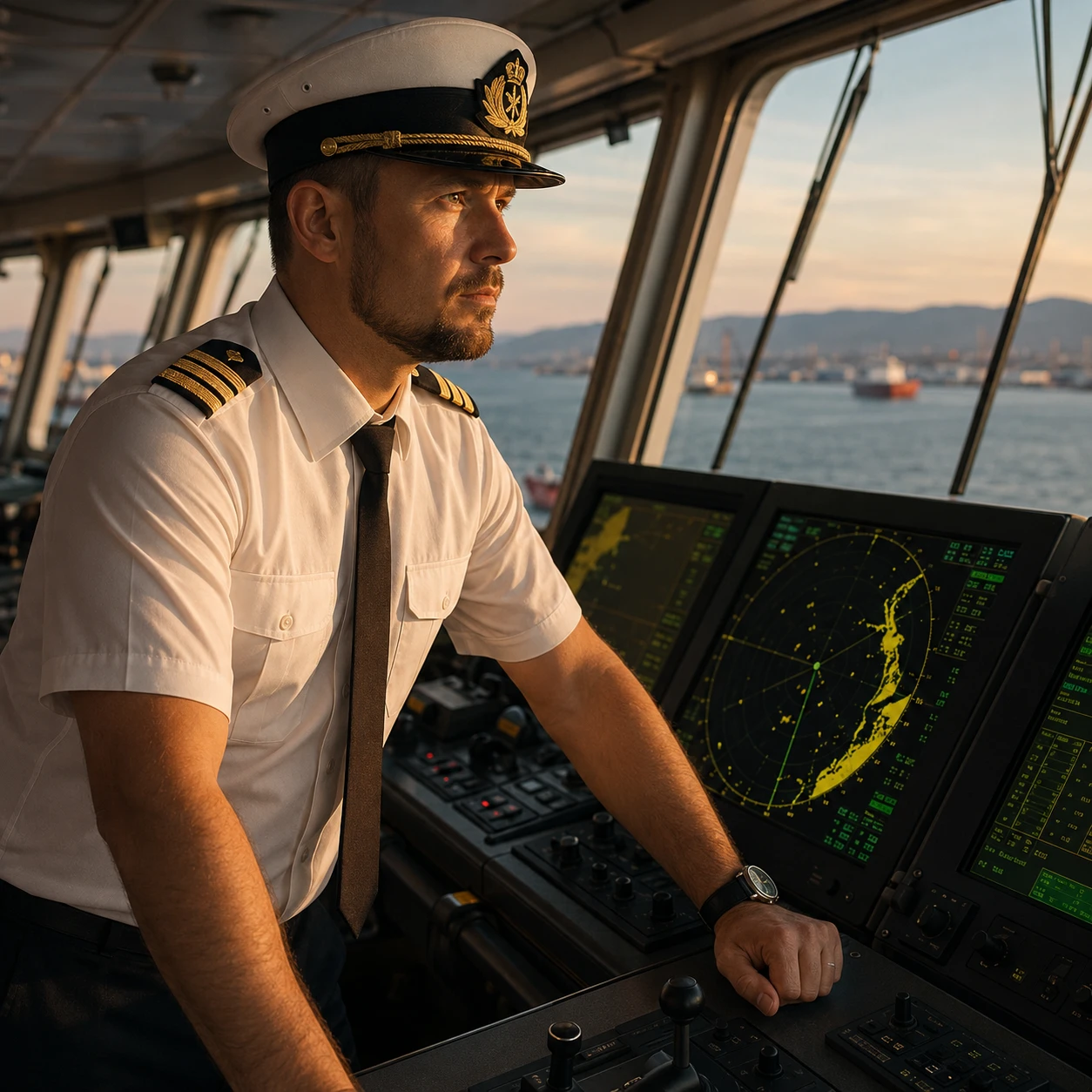
Radar Navigation at Management Level, Radar, ARPA, Bridge Teamwork, Search and Rescue
The Radar Navigation at Management Level course is designed to prepare management-level deck officers for the safe use of radar and ARPA, effective bridge team management, and the conduct of search and rescue operations.
The program covers the use of radar and ARPA for safe navigation, collision avoidance, navigational decision-making, bridge team coordination, and response to emergency and search and rescue situations in accordance with STCW requirements.
STCW Standards: STCW Convention, Sections A-II/2, A-I/12, and B-I/12.
Course Objective
The objective of the course is to train participants in the effective use of radar systems (Radar), Automatic Radar Plotting Aids (ARPA), bridge teamwork (Bridge Teamwork), and conducting search and rescue operations (Search and Rescue, SAR) at the management level. The course is aimed at enhancing participants' competencies and professional skills in accordance with international STCW standards.
Fundamentals of Radar and ARPA
This module covers the principles of radar systems, the basics of Automatic Radar Plotting Aids (ARPA), and the practical use of these systems for navigation and collision avoidance.
- Principles of radar systems:
- Basic principles and components of radar systems.
- Types of radar signals and their characteristics.
- Interpretation of radar images.
- Key functions and capabilities of ARPA:
- ARPA parameters and settings.
- Interpretation of ARPA data.
- Practical use of ARPA for navigation.
- Practical use of radar systems and ARPA:
- Navigation and collision avoidance.
- Analysis and interpretation of radar data.
- Use of radar systems in conditions of limited visibility.
Bridge Teamwork
This module covers the basic principles of effective bridge teamwork, the roles and responsibilities of team members, and the tools and methods that ensure smooth crew operations in stressful situations.
- Principles of effective teamwork:
- Importance of coordination and communication.
- Principles of task distribution.
- Interaction of team members in various situations.
- Roles and responsibilities of each team member:
- Roles of the captain and officers.
- Responsibilities of each team member.
- Procedures in emergency situations.
- Communication and interaction in stressful situations:
- Techniques of effective communication.
- Conflict resolution and stress management.
- Maintaining team spirit.
- Tools and methods of teamwork:
- Use of checklists and protocols.
- Bridge Resource Management (BRM) systems.
- Application of modern technologies for coordination.
SAR: Search and Rescue Operations
This module covers international standards and procedures related to conducting search and rescue operations at sea, coordination with other ships and shore services, and practical use of rescue equipment.
- Fundamentals of search and rescue operations:
- International standards and procedures for SAR.
- Plans and schemes of rescue operations.
- Organization and coordination of SAR.
- Coordination with other ships and shore services:
- Interaction with coordination centers.
- Communication and information exchange among operation participants.
- Roles and responsibilities of SAR participants.
- Practical skills in using rescue equipment:
- Types and functions of rescue equipment.
- Application of equipment in real situations.
- Management of operations at the incident site.
- First aid and evacuation of casualties:
- Basics of first aid.
- Procedures for evacuation and transportation of casualties.
- Ensuring the safety of the rescue operation.
Practical Exercises
This section describes the practical exercises that participants will perform to consolidate theoretical knowledge and practice skills.
- Practical use of radar systems and ARPA:
- Setting up and using radar systems.
- Conducting radar plotting.
- Evaluating radar data and decision making.
- Simulation of bridge teamwork:
- Distribution of roles and responsibilities.
- Communication and coordination of actions.
- Managing stressful situations.
- Conducting search and rescue operations:
- Planning and coordination of search and rescue operations (SAR).
- Use of rescue equipment.
- Providing first aid and evacuation of casualties.
The course Radar Navigation: ARPA, Bridge Teamwork, and Search and Rescue — Management Level provides comprehensive training aimed at enhancing the competence of navigators. Participants will gain the theoretical knowledge and practical skills necessary for the effective use of radar systems, bridge teamwork, and conducting search and rescue operations.
Upon completion of the theoretical and practical training, participants must successfully pass a final assessment of their knowledge and practical skills in the use of Radar, ARPA, bridge team management, and search and rescue operations.
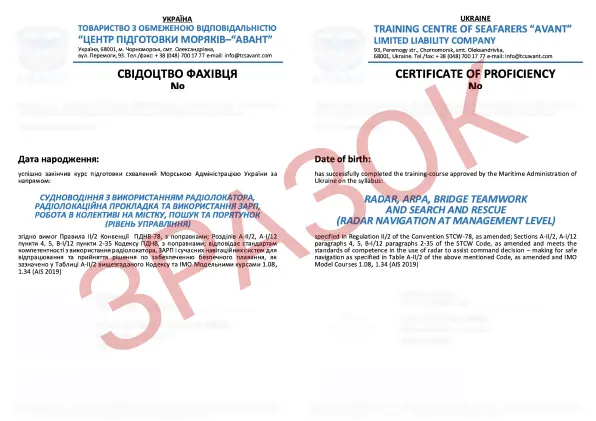
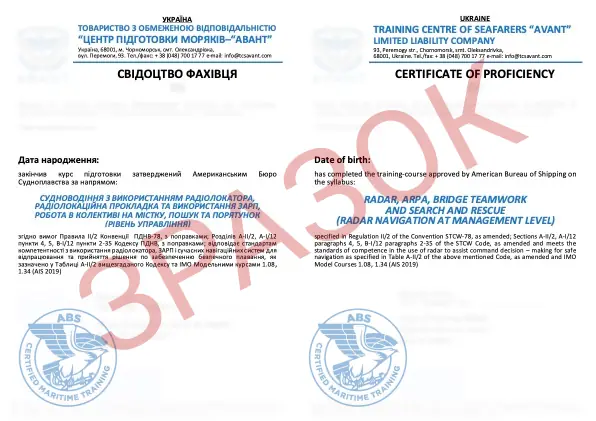
Participants who successfully complete the final assessment are issued an official certificate confirming successful completion of the Radar Navigation at Management Level course in accordance with the requirements of the STCW Convention and Code.
Course Reviews
Great course, highly professional and practical. Excellent focus on Bridge Teamwork (BTM), radar plotting, ARPA utilization, and search and rescue (SAR) coordination.
The training was at a high level. It was helpful to practice vessel collision avoidance using ARPA in restricted visibility and master search pattern procedures.
Thank you for the course. Expertly presented material with practical case studies. The training helps maintain a safe navigational watch and handle emergencies confidently.
How it works:
1. Choose us
We have been in the market for over 20 years. Our courses are certified and recognized worldwide.
2. Register
Complete online registration to save time. Choose a course and after registration and payment, you will get access to training without extra steps.
3. Complete the course
Training is available from any device: PC, laptop, tablet or smartphone (iOS/Android). You can choose online format or download materials.
4. Evaluate knowledge
Assessment is conducted in the form of a test with multiple choice questions. After successful completion of testing, you will receive a certificate.
5. Get certificate
The manager will email you the completed certificates. You can print the certificate at any time. If you prefer, you can request an original hard copy by mail.
How it works:
1. Choose us
We have been in the market for over 20 years. Our courses are certified and recognized worldwide.
2. Register
Complete online registration to save time. Choose a course and after registration and payment, you will get access to training without extra steps.
3. Complete the course
Training is available from any device: PC, laptop, tablet or smartphone (iOS/Android). You can choose online format or download materials.
4. Evaluate knowledge
Assessment is conducted in the form of a test with multiple choice questions. After successful completion of testing, you will receive a certificate.
5. Get certificate
The manager will email you the completed certificates. You can print the certificate at any time. If you prefer, you can request an original hard copy by mail.
Frequently Asked Questions
This course is mandatory for all seafarers, officers and ratings working on board a vessel, in accordance with STCW A-VI/6, p. 1.
To enroll in the course, you need a valid medical certificate and a valid seaman's passport.
After completion, you will know different security levels, emergency procedures, and be able to recognize and avoid threats.
The course covers information about different security levels, emergency procedures, threat recognition and avoidance methods. You will learn about ship security, port facility security, and relevant international regulations.
Yes, the course is fully online and can be completed remotely. You can access the materials at any time convenient for you, from any device with internet access.
Upon successful completion of the course, you will receive an internationally recognized certificate that complies with STCW requirements. The certificate will be available for download immediately after passing the final test.
Yes, the certificate is fully compliant with the International STCW Convention 78 (as amended) and is recognized by maritime administrations of Panama, Liberia, Marshall Islands, and the USA.
Yes, you can take the course from any country as long as you have a stable internet connection. Our platform is accessible worldwide, 24/7.
The course duration is flexible and depends on your learning pace. On average, it takes 2-3 days to complete all materials and pass the final test.
The course cost is competitive and includes all materials, tests, and certification. Please contact our managers for current pricing and available discounts.
The course is available in multiple languages including English, Ukrainian, and Russian. You can choose your preferred language when enrolling.