
ROC GMDSS Training Course
- Format: in-class and distance learning
- Duration: 9 days
- Language: Russian, Ukrainian, English
- Approved flags: Ukraine America Dominica
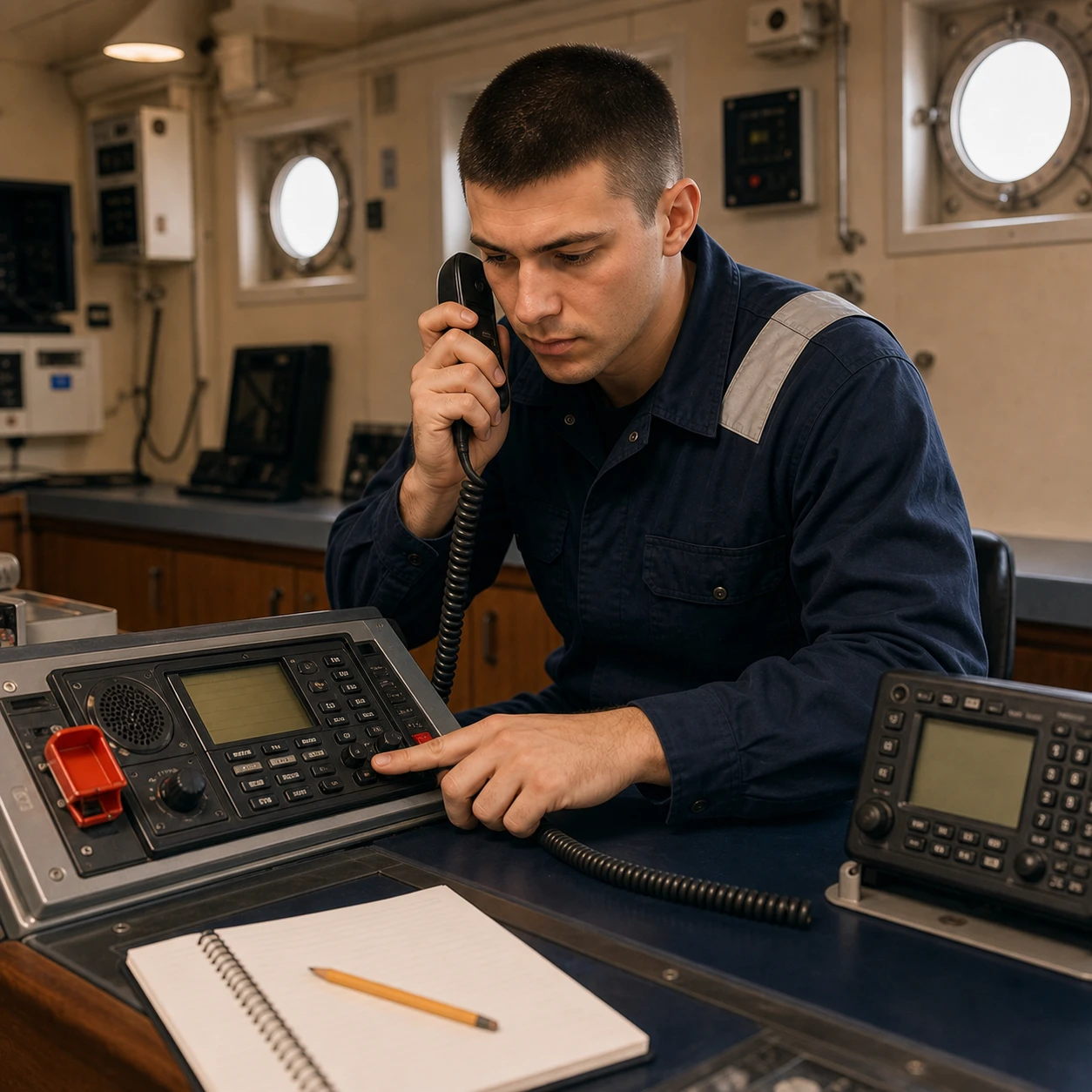
The course "Restricted GMDSS Operator" focuses on an in-depth study of the specifics of working with communication systems and ensuring safety at sea. This course is also known as "Restricted Operator’s Certificate for GMDSS", and "GMDSS Restricted Operator Certificate" and is designed to prepare specialists for the safe and efficient use of communication facilities in various maritime zones.
The main objectives of the course include providing knowledge about the principles of the GMDSS system, training in basic operations using it, including the setup and operation of equipment, as well as practical application in real conditions. The course covers international and national standards for the use of communication systems for transmitting and receiving distress signals, interaction with emergency position-indicating radio beacons (EPIRBs) and search and rescue transponders (SARTs), as well as preparation for managing emergency situations, including the coordination of rescue operations.
This course provides comprehensive training for maritime professionals, necessary for the safe and efficient use of GMDSS communication systems, in accordance with international standards and STCW requirements. Participants will gain practical skills in working with various communication facilities, including simulating real situations on the Transas TGS 5000 GMDSS simulator, which will ensure a deep understanding and confident use of the equipment.
STCW Standards: Convention, section IV/2, points 37-44, Code, section A-IV/2, points 37-44, Code, section B-IV/2, points 37-44.
Introduction to the Global Maritime Distress and Safety System (GMDSS)
This part of the course introduces the basic concepts and principles of the Global Maritime Distress and Safety System (GMDSS). The introduction provides a general overview of the system, its goals, areas of application, and significance for ensuring safety at sea. The areas of operation of GMDSS and their specifics are discussed.
- Overview of GMDSS:
- Definition and main functions of GMDSS.
- Goals and objectives:
- Main goals of GMDSS: ensuring maritime safety and providing assistance in emergencies.
- Specific tasks of the system in various maritime zones.
GMDSS Communication Means and Systems
This topic covers the different types of communication means and systems used in GMDSS. The main functions and features of each device, their role in ensuring maritime safety, and their use in various maritime zones are discussed.
- VHF Radio Installations:
- Description and application of VHF radio communication.
- Setting up and operating the equipment.
- Digital Selective Calling (DSC):
- Functions and benefits of DSC.
- Procedures for using DSC to send and receive distress signals.
- NAVTEX Receivers:
- Description of the NAVTEX system and its importance for receiving maritime warnings.
- Setting up and operating NAVTEX receivers.
- Emergency Position-Indicating Radio Beacons (EPIRBs):
- Principles of operation and use of EPIRBs.
- Procedures for activating and testing EPIRBs.
- Search and Rescue Transponders (SARTs):
- Functions and application of SARTs in rescue operations.
- Setting up and operating SARTs.
- Inmarsat Systems:
- Description and application of Inmarsat satellite communication systems.
- Setting up and operating Inmarsat equipment.
- MF/HF Radio Installations:
- Features and application of MF/HF radio communication.
- Setting up and operating MF/HF equipment.
- Radiotelex (NBDP):
- Principles of operation and use of radiotelex for data transmission.
- Setting up and operating NBDP equipment.
GMDSS Operational Procedures and Regulations
This topic covers the operational procedures and regulations concerning the use of GMDSS. The main regulations and communication procedures, methods of managing communication in distress situations, emergencies, and ensuring safety, as well as everyday communication procedures are discussed.
- GMDSS Regulations and Procedures:
- Overview of the main international and national regulations governing the use of GMDSS.
- Importance of complying with regulations to ensure maritime safety.
- Radio Communication Procedures:
- Standardized procedures for different types of communication (distress, urgency, safety).
- Examples of using procedures in real situations.
- Communication in Distress Situations:
- Procedures for sending and receiving distress signals.
- Methods for coordinating rescue operations.
- Urgent and Safety Communication:
- Description and procedures for urgent and safety messages.
- Examples of using urgent and safety communication.
- Maritime Safety Information (MSI):
- Definition and importance of MSI.
- Procedures for receiving and disseminating maritime safety information.
- Everyday Communication:
- Procedures for routine communication between vessels and shore services.
- Examples of routine communication and its importance for daily operations.
Practical Operation of GMDSS Equipment
This topic covers the practical aspects of using GMDSS equipment. The procedures for operating and setting up various systems and devices used for ensuring safety and communication at sea are discussed.
- Operation of DSC on VHF, MF/HF:
- Procedures for setting up and using DSC on different frequencies.
- Practical examples of sending and receiving distress signals.
- Conducting and Receiving Distress Signals:
- Procedures for sending distress signals using various GMDSS systems.
- Examples of successful rescue operations.
- Using EPIRBs and SARTs:
- Procedures for activating and using EPIRBs and SARTs.
- Practical exercises on operating and testing the equipment.
- Operations with NAVTEX:
- Setting up and operating NAVTEX receivers for receiving maritime safety information.
- Procedures for testing and troubleshooting.
- Operations with Inmarsat:
- Using Inmarsat systems for maritime communication.
- Procedures for sending and receiving messages using Inmarsat.
Maintenance and Troubleshooting of GMDSS Equipment
This topic covers the maintenance procedures and basic troubleshooting methods for GMDSS equipment. Routine maintenance, basic diagnostic techniques, and equipment checks are discussed.
- Routine Maintenance of GMDSS Equipment:
- Procedures for regular inspection and maintenance.
- Importance of keeping equipment in working condition.
- Basic Troubleshooting Methods:
- Overview of common problems encountered in GMDSS equipment operation.
- Basic diagnostic and troubleshooting methods.
- Equipment Testing and Checking:
- Procedures for regular testing and checking the operability of equipment.
- Importance of documenting test results.
- Documentation and Reporting:
- Maintaining documentation for maintenance and testing.
- Reporting requirements and compliance with standards.
Practical Exercises
This part of the course includes various practical exercises aimed at developing skills and using GMDSS equipment. The main tasks and methods for their implementation are considered, so that course participants can confidently apply their knowledge in practice.
- Operation of VHF Radio Station:
- Initiating and responding to distress signals.
- Procedures for everyday communication.
- DSC Equipment:
- Sending and receiving distress signals using DSC.
- Setting up equipment for routine communication.
- Using EPIRBs and SARTs:
- Activating and using EPIRBs and SARTs in emergency situations.
- Maintenance and testing procedures.
- NAVTEX Receivers:
- Receiving and interpreting maritime safety information.
- Setting up equipment and troubleshooting.
- Inmarsat Systems:
- Establishing communication using Inmarsat C.
- Sending and receiving messages via satellite system.
Upon completion of the theoretical and practical training, participants undergo a final assessment. The assessment may include a written examination, an oral interview, and demonstration of practical skills in operating GMDSS equipment using the approved GMDSS Simulator v9.
Participants who successfully complete the final assessment are issued an official certificate confirming successful completion of the ROC GMDSS (Restricted Operator's Certificate) training course in accordance with the requirements of the STCW Convention and Code.
Course Reviews
Відмінний курс англійської! Ідеальне тренування вимови та морської термінології. Рекомендую всім морякам.
Гарна структура курсу та матеріали. Хотілося б більше практики з радіозв'язком.
Ідеально для початківців! Зрозумілі пояснення та багато практичних вправ. Моя впевненість значно покращилася.
How it works:
1. Choose us
We have been in the market for over 20 years. Our courses are certified and recognized worldwide.
2. Register
Complete online registration to save time. Choose a course and after registration and payment, you will get access to training without extra steps.
3. Complete the course
Training is available from any device: PC, laptop, tablet or smartphone (iOS/Android). You can choose online format or download materials.
4. Evaluate knowledge
Assessment is conducted in the form of a test with multiple choice questions. After successful completion of testing, you will receive a certificate.
5. Get certificate
The manager will email you the completed certificates. You can print the certificate at any time. If you prefer, you can request an original hard copy by mail.
How it works:
1. Choose us
We have been in the market for over 20 years. Our courses are certified and recognized worldwide.
2. Register
Complete online registration to save time. Choose a course and after registration and payment, you will get access to training without extra steps.
3. Complete the course
Training is available from any device: PC, laptop, tablet or smartphone (iOS/Android). You can choose online format or download materials.
4. Evaluate knowledge
Assessment is conducted in the form of a test with multiple choice questions. After successful completion of testing, you will receive a certificate.
5. Get certificate
The manager will email you the completed certificates. You can print the certificate at any time. If you prefer, you can request an original hard copy by mail.
Frequently Asked Questions
This course is mandatory for all seafarers, officers and ratings working on board a vessel, in accordance with STCW A-VI/6, p. 1.
To enroll in the course, you need a valid medical certificate and a valid seaman's passport.
After completion, you will know different security levels, emergency procedures, and be able to recognize and avoid threats.
The course covers information about different security levels, emergency procedures, threat recognition and avoidance methods. You will learn about ship security, port facility security, and relevant international regulations.
Yes, the course is fully online and can be completed remotely. You can access the materials at any time convenient for you, from any device with internet access.
Upon successful completion of the course, you will receive an internationally recognized certificate that complies with STCW requirements. The certificate will be available for download immediately after passing the final test.
Yes, the certificate is fully compliant with the International STCW Convention 78 (as amended) and is recognized by maritime administrations of Panama, Liberia, Marshall Islands, and the USA.
Yes, you can take the course from any country as long as you have a stable internet connection. Our platform is accessible worldwide, 24/7.
The course duration is flexible and depends on your learning pace. On average, it takes 2-3 days to complete all materials and pass the final test.
The course cost is competitive and includes all materials, tests, and certification. Please contact our managers for current pricing and available discounts.
The course is available in multiple languages including English, Ukrainian, and Russian. You can choose your preferred language when enrolling.