
Shore jobs for seafarers: how to successfully change your career path
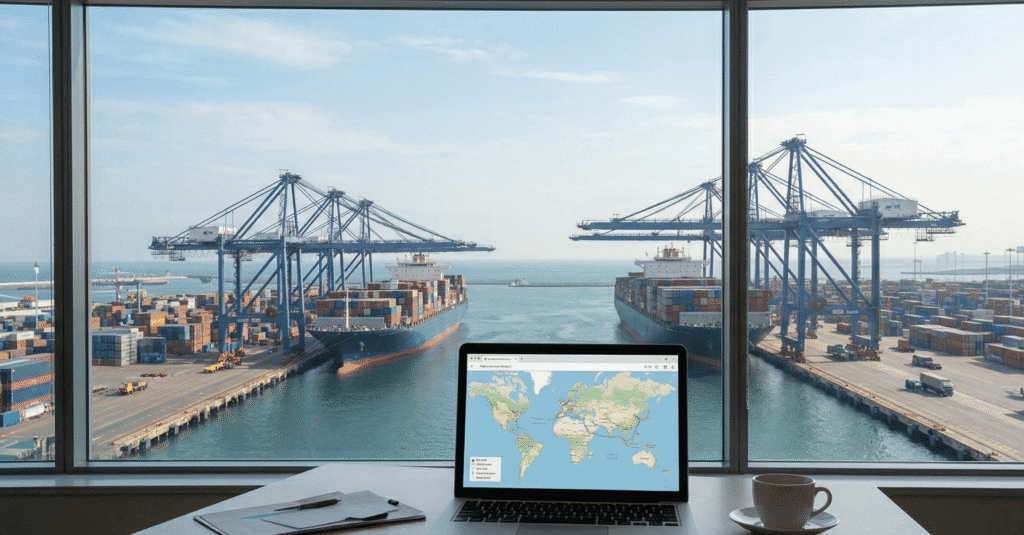
What can a seafarer do ashore? Sooner or later, this question becomes relevant for almost every wanderer of the seas and oceans. This undoubtedly interesting and prestigious profession allows you to see the world, earn considerable money, test your endurance, and gain unique skills. But there is always a flip side to the coin. Hard daily labor, long separations from family, high health and even life risks inevitably force you to think about changing your main occupation.
Let's explore what a seafarer can do after voyages and how to obtain a new specialty.
What can a seafarer do ashore
Transitioning from a vessel to an onshore position in no way means starting from scratch. In the modern maritime industry, there is more than enough shore-based work for seafarers. Retraining allows you to retain your seniority, high professional status, and use specific practical skills acquired at sea. All while gaining another highly demanded profession, stability, and predictable working conditions.
The following main areas might be suitable for a successful shore career:
1. Shipbuilding and ship repair industry.
Engineers, technicians, mechanics, welders, and ship repair fitters with experience in specific equipment are highly valued in this field.
2. Port work for seafarers.
Including technical maintenance of vessels and equipment, working on tugboats, pilot boats, and technical fleet vessels that provide mooring and movement in the water area.
3. Administrative and management activities.
This could be, for example, working in a shipping company office as a recruitment manager. Or in a crewing agency as a maritime document specialist.
4. Technical management.
Thus, the work of a marine superintendent involves monitoring the proper functioning of ship machinery, organizing planned and emergency repairs at shipyards, and supplying vessels with spare parts.
5. Work for seafarers in logistics.
Includes organizing cargo delivery, voyage planning, vessel traffic control, and interaction with ports, customs, and terminals.
6. Environmental safety and occupational health.
An HSE specialist in the maritime sector ensures risk assessment, waste management, prevention of marine pollution, and compliance with international standards on vessels, drilling rigs, or in ports.
7. Education and training.
You can pass on your knowledge to the next generations by becoming an instructor at a maritime training center or a maritime discipline teacher.
How to retrain from a seagoing profession to a shore-based one
Transitioning to a shore job for seafarers may take some time. After all, you will need to undergo training to obtain certificates that meet shore standards, as well as an internship to confirm your skills and gain new experience.
Refresher courses for seafarers seeking shore-based work are organized at maritime training centers and postgraduate education institutes. Programs include lectures, practical exercises, simulator training, and a knowledge test required by international standards. Courses in logistics, project management, and English can also be found on specialized online platforms.
Choose a shore profession you like – and boldly start a new life!
Need help or consultation?
Leave your contacts, and our specialists will contact you shortly.
Or contact us directly:
Working hours:
Monday—Thursday: 9:00 AM to 5:00 PM
Friday: 9:00 AM to 4:00 PM
Saturday and Sunday — days off