
What to Pack for a Seafarer's First Voyage
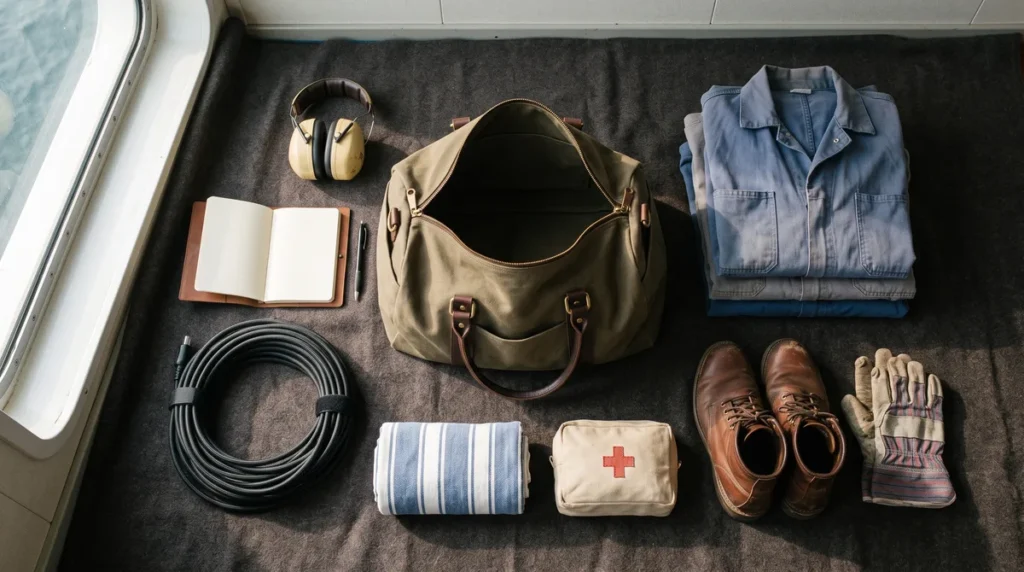
Packing breaks into three layers: documents needed to board, work gear that a shipowner partly issues, and personal items for the length of the contract. Baggage is capped by the airline allowance and by cabin space, so the list starts with a question to the crewing agency rather than with the items themselves: what protective equipment comes issued on board, and what climate the route covers.
Documents
This is the one category where a mistake costs the voyage.

Core documents: an international passport with enough validity left, a Seafarer's Identity Document, a discharge book (service record), a Medical Certificate of Fitness for sea service, an employment contract or letter of intent, and a joining letter from the crewing agency confirming placement on a specific vessel.
Ukrainian seafarers of conscription age also carry a military registration document with current entries. This applies to Ukraine specifically and does not exist as a requirement for other nationalities, but it matters because a missing or outdated entry stops an otherwise complete file at the border. Rules for stamps and dealings with the Territorial Recruitment and Social Support Center (TCC) have changed more than once, so individual cases get checked well ahead of departure, not on the day of it.
Certificate of Competency and STCW training certificates make up the qualification set. Both existence and expiry dates get checked. An expired basic package usually surfaces about a week before submission to the agency.
Copies. A paper set of the full file kept in one folder, plus scans in the cloud. Losing an original abroad turns into a long story with the consulate, and copies shorten it.
Financial: a bank card, account details for wages, and some cash in hard currency. The ATM at the first port of call is not guaranteed to work.
A breakdown of which documents a seafarer needs and how their validity periods work: seafarer certificates.
Working kit
Buying everything in advance is the mistake here.
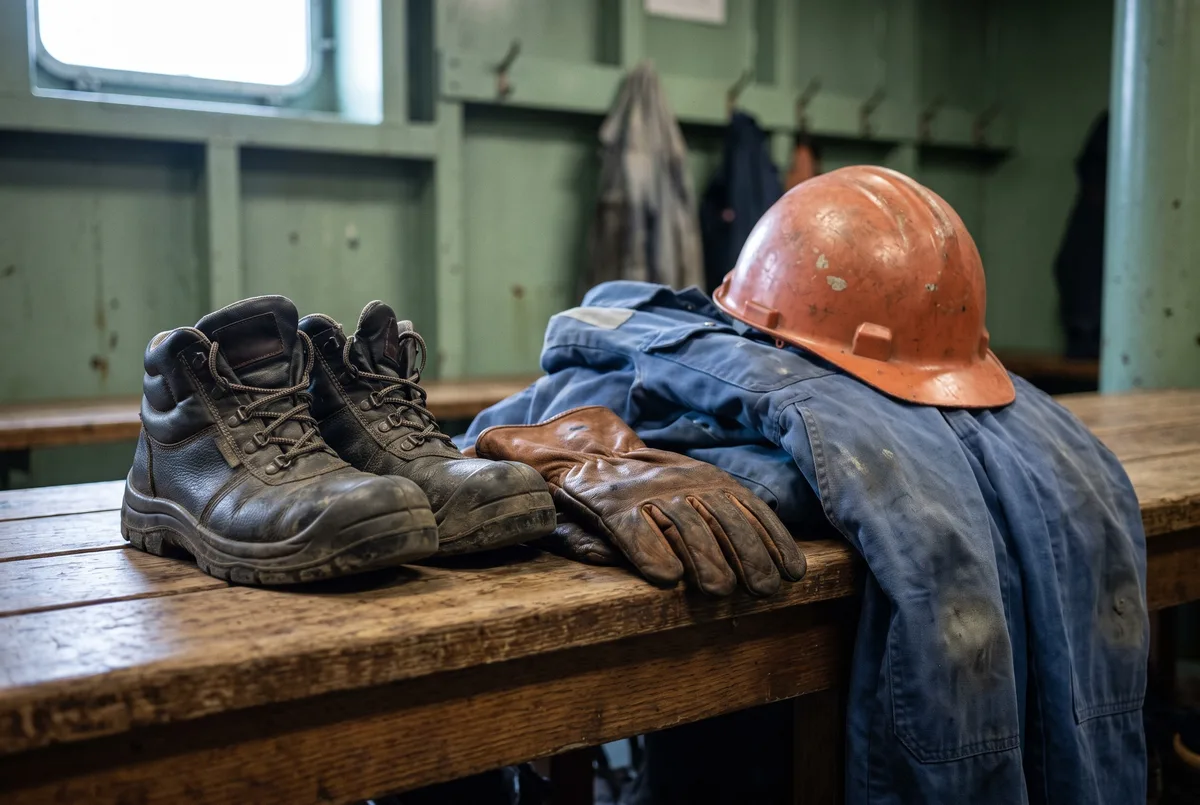
Personal protective equipment (a hard hat, safety glasses, gloves, a boiler suit, safety boots) is issued by the shipowner on most vessels. That is an occupational-safety duty, not a courtesy. What gets issued, and in what size, gets confirmed with the agency before departure: gear bought independently often stays in the cabin unused, because not every boot passes a vessel's requirements.
What crew usually bring on their own:
- spare work gloves, since these wear out fastest;
- a head lamp with spare batteries;
- a folding knife and a rope cutter;
- personal tools, if the position calls for them;
- indoor work shoes and shower sandals.
Fit matters literally. An unusual shoe size or height means the ship's stores may not have a substitute, and that is the one case where bringing one's own beats waiting.
Personal first-aid kit
Start with what is already on board. A medical chest, medical equipment, and a medical guide are mandatory under the Maritime Labour Convention (MLC 2006). On vessels without a doctor, one crew member is designated to handle medical care and medication, trained to STCW requirements. A seafarer is not left to handle a problem alone: there is a medical chest, someone responsible for it, and the option of a radio consultation with a shore doctor.
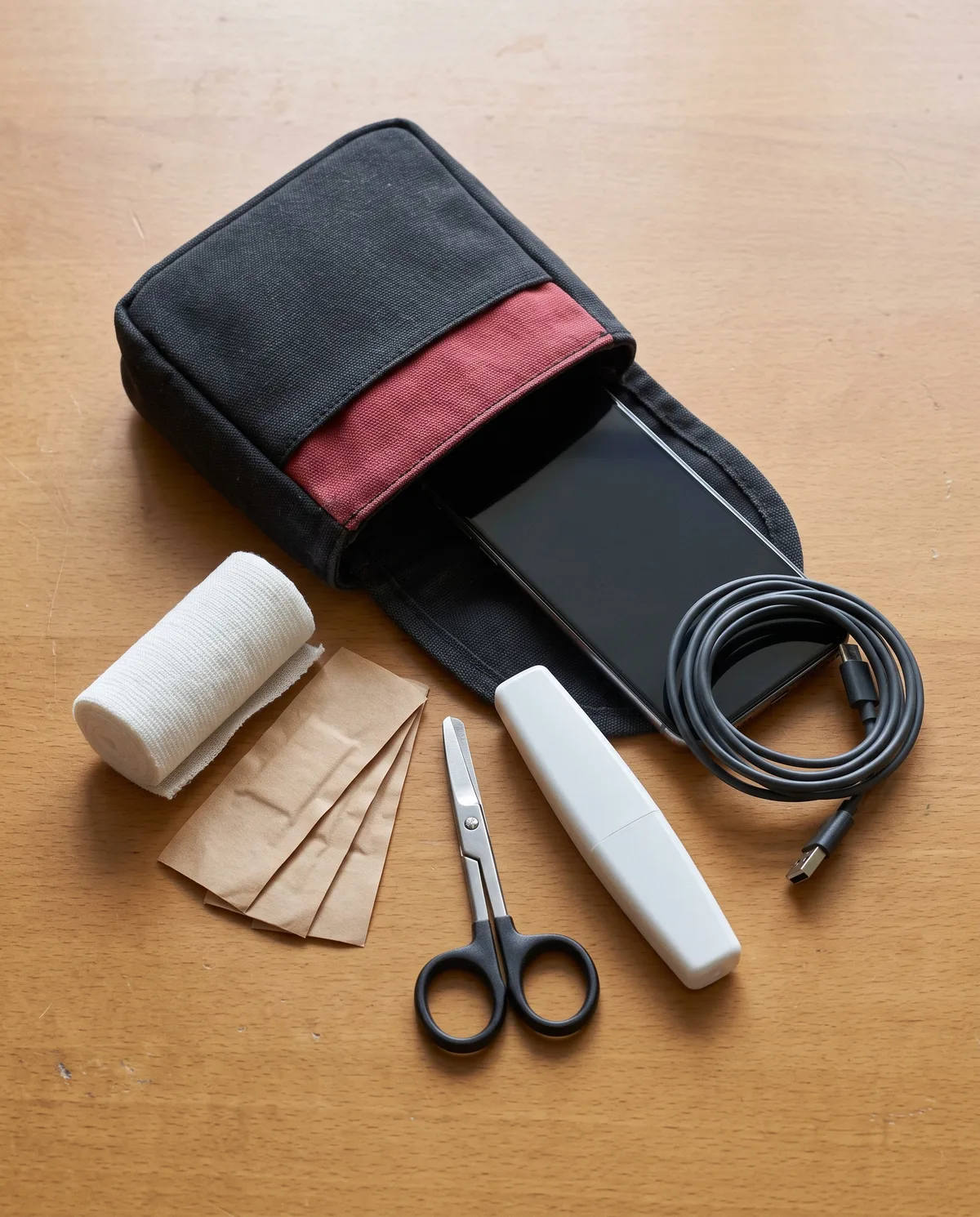
A personal kit covers something different: whatever gets taken regularly, and the small things nobody wants to bother the responsible crew member with.
Categories, not brand names:
- whatever a doctor has prescribed on an ongoing basis, with supply enough for the full contract plus a possible extension;
- something for motion sickness;
- a usual remedy for a cold or an upset stomach;
- plasters, bandage, antiseptic for small cuts;
- high-SPF sunscreen, which runs out fast on deck in the tropics;
- insect repellent, if the route passes through tropical ports.
Agree the contents of a personal kit with a doctor before departure, and confirm with the same doctor how to carry prescription medication across a border. Some everyday medicines are controlled substances in certain countries, and that surfaces at the worst possible moment in port. No dosages or brand names on a cabin-mate's advice: what worked for someone else may not work the same way for everyone.
Two courses cover this ground directly: medical first aid on board ship walks through the ship's kit and a first response, and medical care on board ship is for crew who take on the responsible-officer role.
Clothing for climate
A rookie mistake is packing for the climate of the port of departure. A single contract can take a vessel from the Persian Gulf to the Baltic.
What gets confirmed before packing: the trading area and likely ports of call, the season along the route, and the type of vessel.
A base kit for any route: thermal underwear, a fleece layer, a windproof jacket, a warm hat plus a cap or sun hat, light clothing for the tropics, and one set of clothes for going ashore.
Socks and underwear: pack more than seems reasonable. There is a laundry on board, but a queue and a wash schedule are a real constraint, not a theoretical one.
Sportswear and trainers deserve their own line. If the ship has a gym corner, it turns out to matter more than it seemed while packing.
Electronics and connectivity
A phone, a laptop or tablet, headphones, a power bank, a flash drive or external drive. Plug adapters are not optional: sockets vary by vessel, and cabin voltage differs from what's used at home.
On internet access: the shipowner provides access to means of communication, and any charge for it is expected to stay reasonable. Connection quality still depends on the vessel's equipment and trading area. The gap between a modern ship with a satellite link and an older vessel on a quiet route is a real one, and it gets checked with the agency before signing.
What gets downloaded while there is still a shore connection: films, series, music, books, courses, operating-system updates. The ship's channel is not built for this: it runs slow and shared across the whole crew.
Cables get packed with spares. They break, they get lost, and there is nowhere to buy a replacement mid-ocean.
What helps get through a long contract
The part packing lists usually skip.
Something to do that does not depend on the internet: books, a hobby that needs tools, a language course, anything that fills the hours when the signal drops for a week.
Exercise. A regular routine is the most available answer to what four months of the same corridor does to a person.
Small things from home: a mug, a photo, a favourite tea or coffee. It sounds unnecessary until the third month of the contract.
A personal supply of toiletries for the full length of the contract. The ship's shop is not everywhere, and what it stocks is unpredictable.
Things that cannot be replaced mid-ocean: spare glasses or contact lenses with solution, a sewing kit, scissors, batteries for personal devices.
What not to bring
Alcohol. Most vessels run a restriction or an outright ban, and bringing any along is grounds for dismissal.
Anything read as a weapon: pepper spray, stun guns, fixed-blade knives beyond a reasonable working size.
Drones and powerful radio equipment without prior clearance: a separate category of trouble with port authorities in a number of countries.
Excess volume. Three pairs of shore shoes for a few hours ashore at a time is dead weight. The cabin is small, and the wardrobe is one.
Anything expensive enough that losing it would hurt. The cabin locks, but shared living is still shared living.
Pre-departure checklist
Documents: passport, Seafarer's Identity Document, discharge book, medical certificate, contract, joining letter, and all qualification and training certificates with valid dates. Paper copies plus scans in the cloud.
Confirmed with the agency: what protective equipment is issued on board, the trading area, connectivity and its terms, and the airline's baggage allowance.
Medical: kit packed and agreed with a doctor, prescription medication documented for travel, supply sized for the contract plus a possible extension.
Everyday life: clothing for both climate scenarios, toiletries for the full contract, electronics with adapters and spare cables, content downloaded in advance.
At home: power of attorney or account access if family needs it, regular payments covered for the time away, copies of documents left behind.
FAQ
How much baggage is allowed aboard?
Two things set the limit: the airline allowance to the port of embarkation and the size of the cabin. Exact figures get confirmed with the agency along with the travel route.
Does the ship provide protective equipment?
Supplying personal protective equipment is the shipowner's obligation. What a specific vessel issues gets confirmed before departure.
Can personal medication be brought on a voyage?
Yes, when it is doctor-prescribed. Kit contents get agreed with a doctor, and how to carry prescription medication across borders gets worked out in advance, since requirements vary by country.
Is there a first-aid kit on board?
Yes. A medical chest, medical equipment, and a medical guide are mandatory under MLC 2006. On vessels without a doctor, a trained crew member is designated to handle medical care.
Will there be internet on the ship?
The shipowner provides access to communication, but quality depends on the vessel's equipment and trading area. Terms get confirmed before signing the contract.
What's an unusual item to pack for a first voyage?
Adapters for different socket standards, a spare set of gloves, a head lamp, and offline content. These are the things people remember only once at sea.
Need to update documents or choose courses for a new contract?
Fill out the seafarer application — our specialists will help determine the required certificate package.
Or contact us directly:
Working hours:
Monday—Thursday: 9:00 AM to 5:00 PM
Friday: 9:00 AM to 4:00 PM
Saturday and Sunday — days off