
How to Become a Seafarer in Ukraine: A Step-by-Step Path
The state assigns a seafarer's qualification; a training centre only provides the preparation without which the qualification document is never issued. That division shapes the whole sequence: a medical exam, mandatory safety courses, a rating certificate, seafarer's documents, English. Below is what follows what, which rule backs each step, and where people typically get stuck.
Two Routes Into the Profession: Maritime College or a Rating Certificate
There are two roads, and they lead to different positions.
The first is educational. A maritime institution of higher or pre-higher professional education, a navigation or marine engineering programme, sea time built into the course itself. The path is long, but it leads to an officer's diploma: the requirement for a maritime education document is set out in the Regulation approved by Cabinet of Ministers of Ukraine (Ukraine's central government) Resolution No. 1499 of 30.12.2022.
The second runs through the rating track. Training for a specific rating and a specialist certificate: watchkeeping rating, able seafarer deck, watchkeeping motorman, qualified motorman, ship's electrician, ship's cook. The list of certificates and the procedure for issuing them is set by Order No. 784 of the Ministry of Infrastructure of Ukraine, dated 05.09.2023, "Certain Issues of Certification of Ratings of Crews of Sea-Going Ships." Entry is shorter; the position is a rating position.
The two roads are not sealed off from each other. A rating can later enrol in a maritime institution and move into the officer track. What does not exist is a scheme where N years of work automatically becomes a mate's licence: an officer's diploma needs education, sea service, and an exam.
Baseline Requirements
- Age. Order No. 784 ties it to a specific certificate: watchkeeping rating and watchkeeping motorman, from 16; qualified rating, qualified motorman, ship's electrician and ship's cook, from 18. The international rule matches: STCW Regulation II/4 (the 1978 Standards of Training, Certification and Watchkeeping for Seafarers Convention, as amended by the 2010 Manila amendments) sets a minimum of 16 for a rating forming part of a navigational watch, and Regulation II/5 sets 18 for an able seafarer deck.
- Health. The requirement is fixed in Article 52 of the Merchant Shipping Code of Ukraine (Law No. 176/95-VR). Without a valid medical certificate, neither a qualification document nor a contract will be issued — this single point overrides everything else.
- English. The convention builds the requirement into standards of competence; in practice, an employer tests it separately.
- Passport, taxpayer identification number, a document confirming education or training.
What is not in the requirements: no regulation promises employment or guarantees a passed exam. Offers of "no exam," "no sea time," "certificate in a day" look like a shortcut, but in practice they are a sign the document will not survive a check against the state register.
Step 1. Medical Examination
It makes sense to get the medical exam done first: it either clears the way forward or rules out courses that would otherwise go to waste.
The legal basis changed recently, and old notes are no longer reliable. For years, the applicable rules were the Regulation on Determining Fitness for Work on Ships Based on State of Health, approved by Ministry of Health of Ukraine Order No. 347 of 19.11.1996. They were replaced by the Regulation on Determining a Person's Medical Fitness for Work on Sea-Going Vessels or Inland Waterway Vessels, Ministry of Health Order No. 1793 of 26.11.2025, registered with the Ministry of Justice of Ukraine. Before the exam, ask the medical board which edition it is applying on the current date.
A second point: the exam is not done at just any clinic. The Ministry of Health separately approves a list of institutions and board chairs authorised to examine seafarers (for example, Orders No. 627 and No. 2096). A certificate from an institution outside that list will not be accepted.
The examination is carried out by medical institutions authorised by the Ministry of Health; training centres do not run this board themselves. The current list is published on the ministry's website and needs checking before booking.
Step 2. Safety Training (Basic Safety Training / BST)
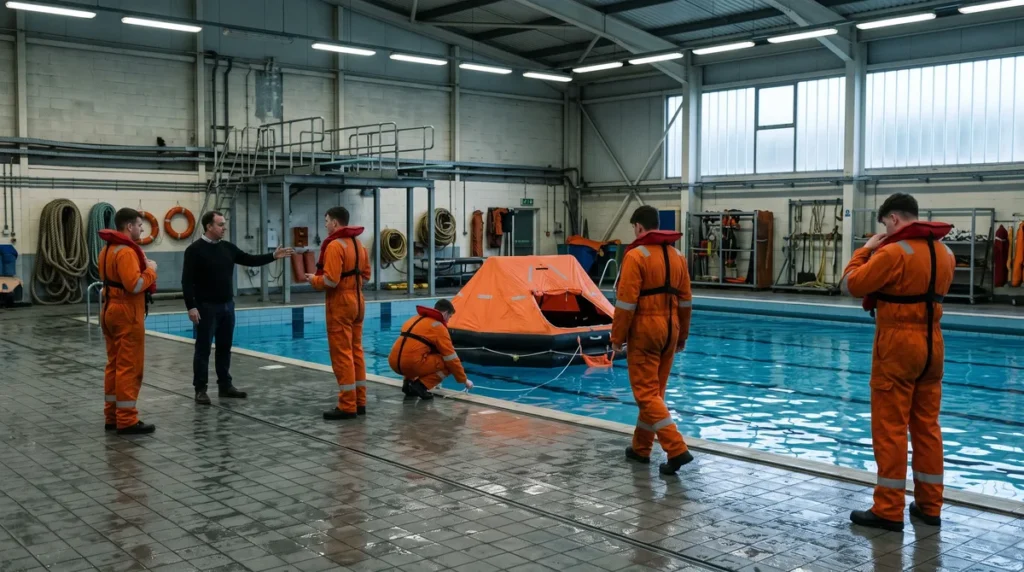
This is the one course required of everyone who goes to sea, regardless of position. The basis is Chapter VI of the STCW Convention, Regulation VI/1: basic safety training covers personal survival techniques, fire prevention and firefighting, elementary first aid, and personal safety and social responsibilities.
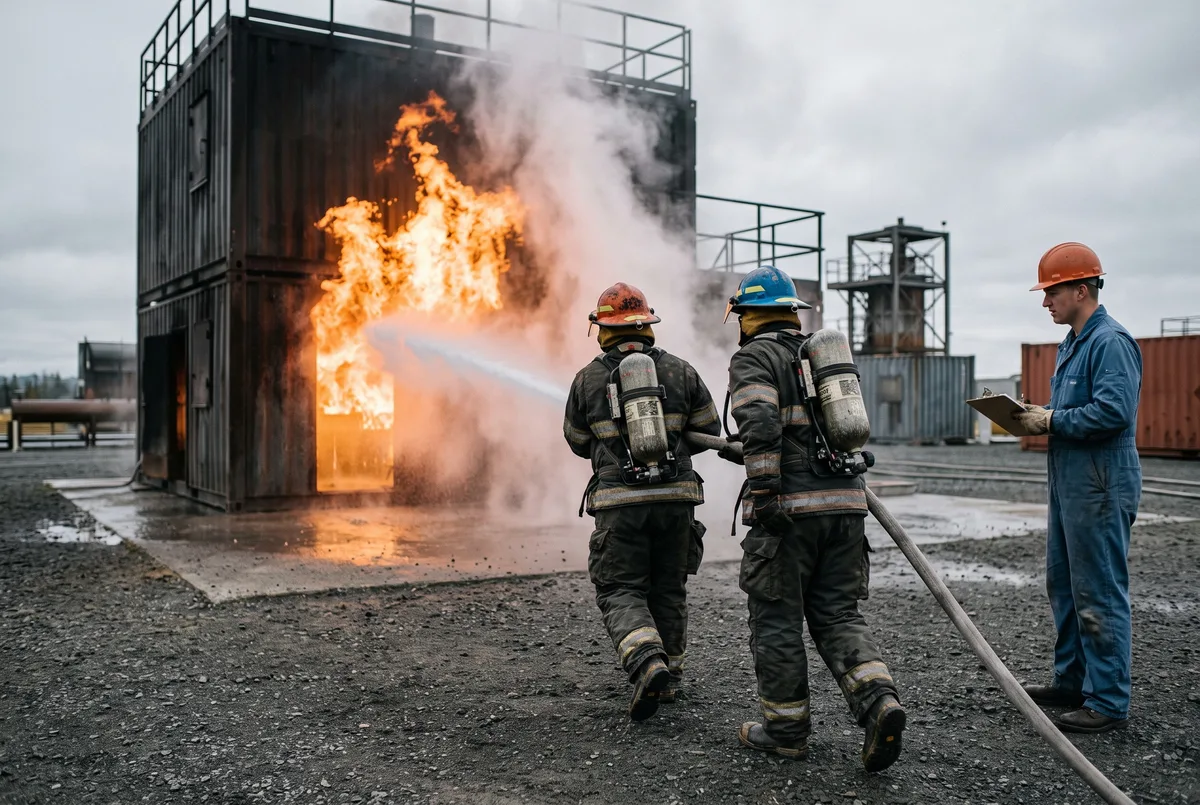
Order No. 784 sets the same requirement at Ukrainian level: a rating's specialist certificate requires a certificate in basic safety training plus a certificate in security awareness training.
Some positions require periodic revalidation: the STCW Code sets a five-year interval for personal survival techniques and firefighting. This is where training starts: basic safety training is required for a rating, a motorman, and a cook alike.
The course runs five days and is offered in two formats, in person and remote.
Step 3. Rating Certificate
Deck branch. Seaman Second Class is the entry position, followed by Seaman First Class. Under STCW these correspond to Regulation II/4 (rating forming part of a navigational watch) and Regulation II/5 (qualified rating, able seafarer deck). Regulation II/4 requires either approved sea service combined with training and experience of not less than six months, or special training, pre-sea or on board, plus not less than two months of approved sea service. Regulation II/5 requires meeting II/4 plus not less than 18 months of sea service on deck, or not less than 12 months where approved training is included.
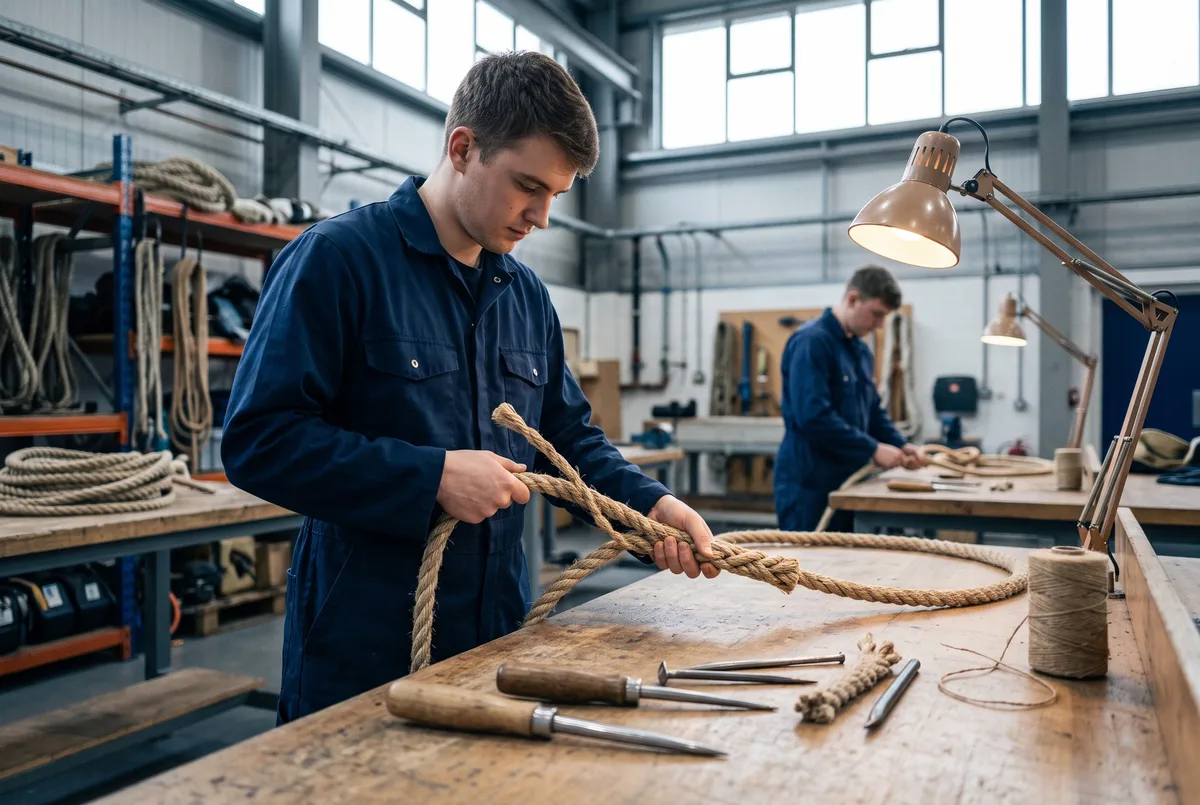
Engine branch. Motorman (Machinist) Second Class is the entry into the engine room, followed by Qualified Motorman. Under Ukrainian rules, these certificates are listed in the same Order No. 784.
One detail on sea service matters: Order No. 784 ties the minimum not to a single figure but to the form of training; shore-based training carries shorter requirements than training without release from work. Exact figures for each certificate are set out in the annexes to the order, and they need checking against the current edition, not a summary.
Ratings' specialist certificates are issued and entered into the Unified State Register of Seafarers' Documents (Єдиний державний реєстр документів моряків; the state database recording every certificate, diploma and identity document issued to a Ukrainian seafarer) by Ukraine's Maritime Administration (Морська адміністрація). A training centre's role in this scheme is to run the approved training programme, nothing more.
Both entry-level programmes, Seaman Second Class and Motorman (Machinist) Second Class, run for three months and are delivered online or in person. Entry has no sea-service requirement: candidates need a full general secondary education and to be at least 18 by the end of training. On completion, a state-format certificate confirming the working qualification is issued, with the record entered into Ukraine's unified state register of education documents.
Step 4. Seafarer's Documents
The Seafarer's Identity Document (SID) is issued by the State Service for Maritime and Inland Water Transport and Shipping of Ukraine (the government body handling seafarer identity documents). The procedure was set by Cabinet of Ministers Resolution No. 441 of 26.06.2015; on 18 June 2025 the rules were updated by Resolution No. 731, which introduced a document with a contactless electronic chip. The same resolution approved a pilot project for issuing and exchanging the document abroad through a service centre in Warsaw, for two years or until martial law ends. The rule changed recently, so check the current procedure before applying.

A seafarer's service record book logs time worked on ships and is issued through the service centres of the state enterprise Morrichservice (Моррічсервіс; Ukraine's state operator of seafarer service centres). Entries in it are what count as proof of sea service when moving to the next level. Without them, sea service does not legally exist.
Qualification documents, meaning specialist certificates for ratings and diplomas and endorsements for officers, are all entered into the Unified State Register of Seafarers' Documents; status is checked through the Seafarer's Electronic Cabinet (Електронний кабінет моряка), an online portal for verifying document status against the register.
The split is simple: a training centre trains and issues course certificates, the state assigns the qualification and issues the identity document, service record book, and diplomas.
Step 5. English and Testing
STCW builds the language requirement into standards of competence. Section A-II/1 of the STCW Code requires English sufficient to use charts and nautical publications, understand meteorological information and safety messages, and communicate with other ships and shore stations, including the IMO Standard Marine Communication Phrases (SMCP). Ratings need less, but not zero: watch commands, briefings and drills run in English.
There is also a layer of screening the convention does not cover: corporate tests such as Marlins for English and CES for STCW knowledge. Shipping companies and crewing agencies use them; they do not replace STCW requirements, but their results are often what filters candidates out at the entry stage. Ratings in Ukraine take no state computer exam; masters and officers take the state exam in the CES 6.0 system or its later version, under Cabinet of Ministers Resolution No. 1499.
Language training is also a separate course in AVANT's catalogue: maritime English for passenger-vessel crew: three months, delivered online through an interactive platform, aimed at cooks, waiters and stewards on cruise ships.
How Long It Takes to Enter the Profession
There is no single timeframe, because four independent stretches add up.
- Medical exam: depends on booking and how busy the authorised institution is.
- Courses: length is set by the approved programme, five days for basic safety training, three months for a rating certificate.
- State document processing: deadlines for administrative services are set by the body providing them; the service description gets checked on the date of application.
- Finding a first contract: not regulated at all, and depends on the market. Promises of "first voyage in N months" are a reason to be cautious.
Budget time for sea service too. STCW Regulation II/4 requires a minimum of two months of approved sea service even after special training is completed; Regulation II/5 requires 12 or 18 months. At officer level, the count runs in years.
What Kind of Character the First Contract Requires
The medical board checks the body, the exam checks knowledge. Everything else gets checked by the ship itself, usually within the first weeks.
Stress tolerance looks mundane in practice. A general emergency alarm sounds at night: a crew member runs to the muster station in a life jacket and is expected to know a station number and a task from memory, not work it out half-asleep. In a storm the deck moves underfoot and the work does not stop. Someone who freezes in those moments holds up the whole team, and in a fire drill the count runs in seconds.
The crew is almost always mixed: Ukrainians, Filipinos, Indians, Romanians. The shared working language is English, often a second language on both sides. A watch handover is a short conversation, and there is no room in it for staying quiet out of shyness: missing a point about a ballast operation and letting it pass hands the next watch someone else's error to clean up. A closed community does not forgive grudges left to sit. Someone argued with over breakfast stands watch again that evening, with nowhere to go to cool off.
Adaptability means accepting that the next ship will be different: a different cargo, a different main engine, a different master with different habits, a different time zone every few days. The watch schedule splits sleep into two blocks, and the body does not adjust to that right away.
Discipline on board is written into procedures. Entering an enclosed space without an atmosphere test, working at height without a permit, a removed lockout tag on de-energised equipment: these are the kinds of breaches that later turn up in accident reports.
Then there is separation. A contract runs for months, and life at home does not pause: a child's birthday, a parent's illness, an argument that cannot be finished in person. Satellite internet on many ships is paid and slow, and on a long passage it disappears altogether. First contracts break more often over this than over the physical workload. It helps to agree call times with family in advance and to leave anything that cannot be settled in ten minutes for later.
Learning continues after the first contract too. Safety certificates need revalidation every five years, bridge and engine-room equipment changes, and every next rank requires a new approved course and a new exam.
Who This Job Is Not For
- Anyone with a health condition that disqualifies them. Fitness is confirmed before every contract; there is no such thing as a single check at entry.
- Anyone who struggles with strict hierarchy. Order on board is maintained by the master, and the master's lawful orders are binding on everyone (Article 65 of the Merchant Shipping Code).
- Anyone expecting to sail immediately. The medical exam, courses and document processing all happen before the first contract, and that takes more than a week.
- Anyone who needs a predictable schedule. Watches, night shifts and work on holidays are the norm, and there is no taking a day off mid-contract.
Frequently Asked Questions
How to become a seafarer without a maritime degree?
Without a higher maritime education, entry into the rating track is possible: certificates for a rating, motorman, ship's electrician and cook are issued based on training and sea service under Ministry of Infrastructure Order No. 784 of 05.09.2023. "Without a degree" does not mean "without training": safety training, an approved course in the specialty, an exam and sea service are all required regardless. Officer positions require a maritime education.
Where to study to become a seafarer in Ukraine?
Two types of institution. Maritime institutions of higher and pre-higher professional education train officers. Training and assessment centres operating under approved programmes provide the mandatory courses and rating qualifications.
What Is Needed to Become a Seafarer: the Minimum Set?
A valid medical certificate, basic safety training plus security awareness training, a rating certificate, a Seafarer's Identity Document, and a service record book. Everything qualification-related is entered into the Unified State Register of Seafarers' Documents.
How long does it take to become a seafarer?
The timeframe adds up from course length, document processing time, and the required sea service. Basic safety training takes five days, a rating programme takes three months. Sea-service requirements are set by STCW and Ukrainian rules and vary by specialty and form of training.
Seafarer, where to start right now?
With a medical exam at an authorised institution and with basic safety training: both are needed under any scenario.
Need to update documents or choose courses for a new contract?
Fill out the seafarer application — our specialists will help determine the required certificate package.
Or contact us directly:
Working hours:
Monday—Thursday: 9:00 AM to 5:00 PM
Friday: 9:00 AM to 4:00 PM
Saturday and Sunday — days off