
Seafarer Medical Examination in Ukraine

At the medical examination in Ukraine, a seafarer sees up to ten specialist doctors (the obstetrician-gynaecologist for women only) and has eighteen tests. Since 6 February 2026, the lists of doctors and tests, the eyesight and hearing standards and the contraindications have been set by the annexes to the Rules approved by Order No. 1793 of the Ministry of Health of Ukraine (MOH). The Rules name two documents for the examination: an identity document and the previous medical certificate, if there is one. What the document itself must contain and what to check in it before a contract is covered in a separate article on the seafarer's medical certificate.
What Changed on 6 February 2026
Previously, the list of healthcare institutions entitled to carry out the medical examination for seafarers was approved by the MOH every year. How often the examination was required depended on age and occupational group: for occupational groups I and II, every year under 21, once every two years from 21 to 40 and every year again from 40, while group III — persons who make decisions related to the safety of navigation (masters, masters' mates, engineers and others) — were examined every year at any age.
Both rules were set by MOH Order No. 347, which ceased to be in force on 6 February 2026. The new Rules contain neither an MOH list nor an age scale for adult seafarers.
What to Bring
Paragraph 4 of Section II of the Rules names two documents: an identity document (a passport of a citizen of Ukraine, or a document of a foreign national or stateless person showing the first name, surname, date of birth and a photograph) and the seafarer's previous medical certificate, if there is one. The medical certificate form has a space for a 3×4 photo — check with the healthcare institution whether you need to bring one.
Which Doctors You See
Annex 3 to the Rules names ten specialists:
- an occupational health physician or a ship's doctor (who is also the recognised medical practitioner);
- an otolaryngologist;
- an ophthalmologist;
- a dermatovenereologist;
- a psychiatrist;
- a surgeon;
- a neurologist;
- an obstetrician-gynaecologist (for women);
- an orthopaedic traumatologist;
- a psychophysiologist.
The psychiatric examination is carried out under a separate Procedure approved by MOH Order No. 651 of 18 April 2022, within the time limits set by the Rules.
The recognised practitioner may also involve other doctors, such as a urologist or a cardiologist, and order additional tests taking into account the working conditions on board.
Which Tests You Have
The minimum list under Annex 3 has eighteen items:
- complete blood count;
- antibodies to HIV and to the hepatitis C virus;
- hepatitis B antigen;
- microprecipitation reaction with cardiolipin antigen (RW);
- blood glucose;
- urinalysis;
- vestibular examination;
- visual acuity;
- visual fields and light perception;
- colour perception;
- intraocular pressure;
- cycle ergometry;
- rheoencephalography;
- lung function (external respiration);
- chest X-ray;
- audiometry;
- ECG;
- smears for gonorrhoea and sexually transmitted infections.
The list is the same for the preliminary, periodic and extraordinary examinations.
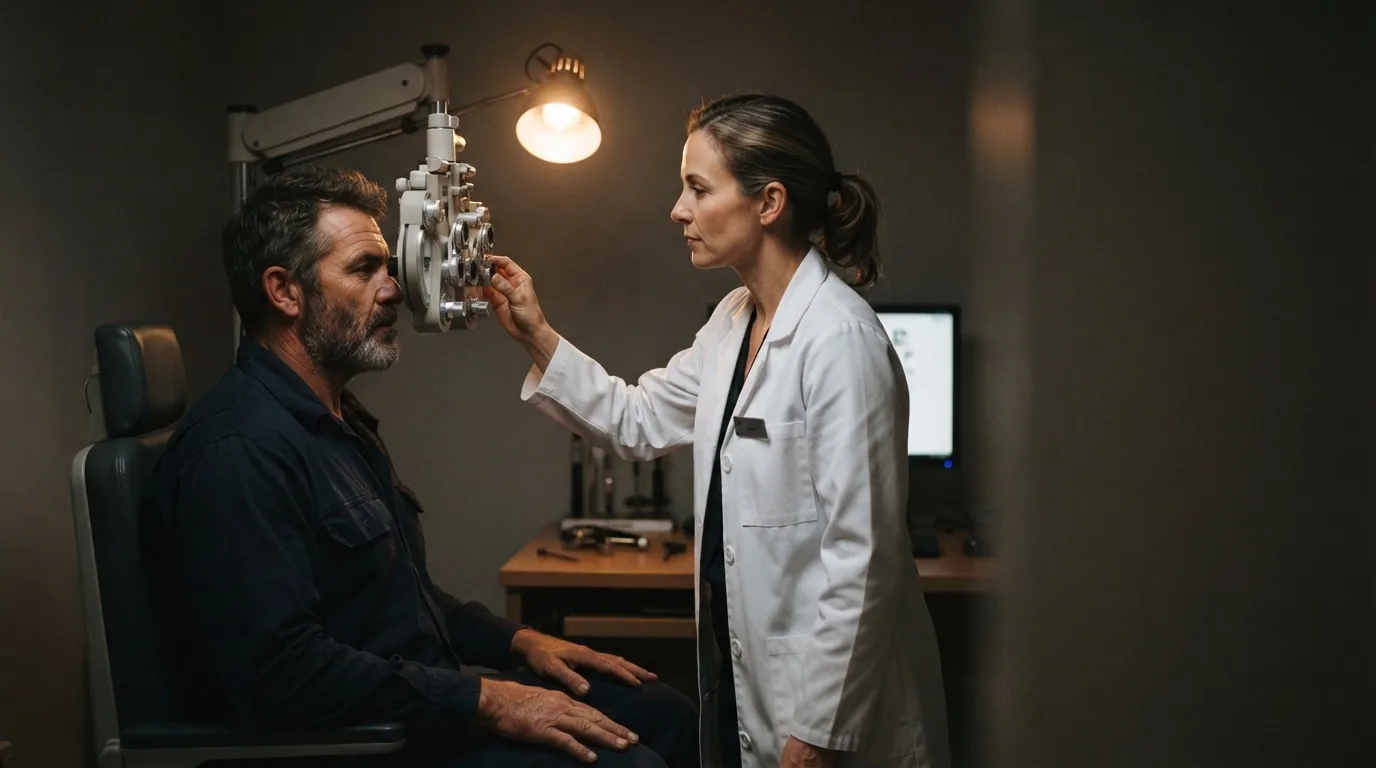
Eyesight Requirements
The "For seafarers" table in Annex 1 to the Rules matches the values of Table A-I/9-1 of the STCW Code. The strictest requirements apply to masters and deck crew with look-out duties.
| Position | Each eye, with correction | Colour vision (CIE standard) |
|---|---|---|
| Masters, deck crew with look-out duties | at least 0.5 | 1 or 2 |
| Engineers, electro-technical officers, electricians, engine-room watch | at least 0.4 | 1, 2 or 3 |
| GMDSS radio operators | at least 0.4 | 1, 2 or 3 |
Deck crew also need normal visual fields, while engine crew and radio operators need sufficient visual fields. The values are given in Snellen decimal notation. For deck crew, a note recommends 0.7 in one eye to reduce the risk of an undetected underlying eye disease. The colour vision standards of the CIE (International Commission on Illumination) are defined by its recommendations CIE-143-2001.
Hearing and Physical Fitness Requirements
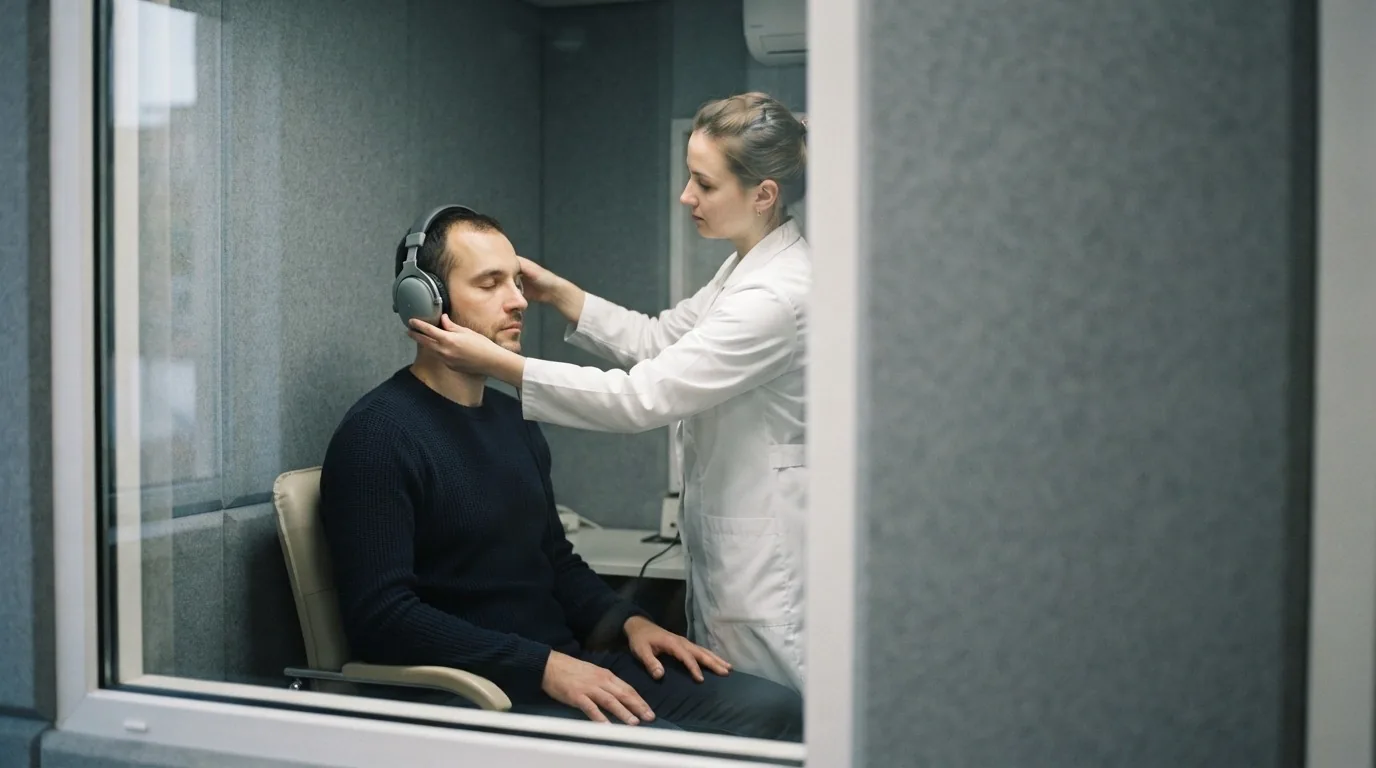
Hearing is considered satisfactory if the average loss in both ears, regardless of whether a hearing aid is used, does not exceed 40 dB at 500, 1,000, 2,000 and 3,000 Hz. If the loss is higher, hearing is considered satisfactory provided the seafarer passes a test on an audiometer meeting ISO 8253-1:2010 or on equivalent equipment. Restriction 02 "hearing aid required" may also be entered in the certificate.
Minimum physical abilities are assessed separately. A seafarer must be able to climb up and down ladders, step over coamings, open watertight doors, lift and carry a load (the annex gives 18 kg as an example), stand a four-hour watch, work in a confined space, use breathing apparatus (if this is part of their duties) and put on a lifejacket or an immersion suit.
Contraindications and Restrictions
The list of contraindications in Annex 2 is organised by the codes of the International Classification of Diseases, Tenth Revision. For each condition it states whether unfitness is temporary (T) or permanent (P) — the Ukrainian annex marks them with the initial letters of the Ukrainian words — and under what conditions a person is nevertheless fit.
Restrictions may be entered in the certificate. They are marked with codes from 01 to 09, including:
- vision correction required;
- hearing aid required;
- limb prosthesis required;
- no solo watchkeeping in the wheelhouse;
- daylight work only;
- no duties related to navigation;
- work only on a specific ship, only in a specific area, or only specific types of work.
Frequently Asked Questions
Do I have to undergo the medical examination every year after 40?
No. That scale was in Order No. 347, which ceased to be in force on 6 February 2026. The Rules in force have no separate age scale for older seafarers. The expert commission of the healthcare institution may shorten the period until the next examination, taking into account the seafarer's state of health.
Are the tests different at a periodic examination?
No. The minimum list is the same for all types of examination.
The Medical Examination and Medical Training
The medical examination confirms that you may work at sea. For seafarers designated to provide medical first aid on board, Regulation VI/4 of the STCW Convention sets a separate standard of training, and the AVANT training centre has a medical first aid course for this. For conditions, format, duration and the programme, see the course page.
Need to update documents or choose courses for a new contract?
Fill out the seafarer application — our specialists will help determine the required certificate package.
Or contact us directly:
Working hours:
Monday—Thursday: 9:00 AM to 5:00 PM
Friday: 9:00 AM to 4:00 PM
Saturday and Sunday — days off