
How Much Do Seafarers Earn in Ukraine
The spread across the fleet runs tenfold. An ordinary seaman (OS) under a standard ITF agreement earns USD 1,483 a month; an able seafarer (AB) on an offshore supply vessel reaches USD 3,022 by market rate; at the top of the officer ranks, pay climbs almost an order of magnitude higher. Everything else sits between these numbers: rank, vessel type, flag, company. Below are ratings' pay scales, the ILO minimum, and a breakdown of what actually makes up the figure in a contract.
What Determines a Seafarer's Salary
Rank is the main multiplier. Under the ITF Uniform Total Crew Cost (TCC) collective agreement for 2026, rates are tied directly to a coefficient set against the able seafarer's rate, AB, taken as the baseline of 1.0: the ordinary seaman sits below it, the bosun and chief cook above it, and at management level the coefficient passes 3.
A tanker, gas carrier, or chemical tanker pays more than a bulk carrier for the same rank. Different cargo, different risk level, mandatory extra training, and frequent vetting inspections.
Next comes the flag, and whether the vessel is covered by a collective agreement. If it is, rates and the pay structure are set out in the document and can be checked line by line. If not, the shipowner sets the terms, and this is where companies start to differ: larger operators tend to pay more reliably, though not always more, while smaller ones sometimes promise a high rate and then delay payment.
The country of employment and tax residency determine how much of the contract figure actually reaches the seafarer's account. The rate in the contract is stated before deductions, and the tax treatment depends on where the employer is registered and where the seafarer is considered a resident. Two identical rates on paper can produce a different take-home income under different employment arrangements.
Experience, certificates, and English are the one part of the equation a seafarer controls directly. The market currently favours them. According to BIMCO and the International Chamber of Shipping, the world fleet is crewed by 2.57 million seafarers; 2026 projections point to a shortage of 39,100 certified officers against a surplus of around 56,890 ratings, and by 2030 the industry will need an additional 113,735 officers. The shortage sits in the officer ranks, where rates are rising faster.
The Baseline: The ILO Minimum Wage
The International Labour Organization, through its Joint Maritime Commission, sets the minimum basic wage for an able seafarer, AB. No contract should sit below this figure. At a meeting on 14–15 April 2025, the scale was agreed: USD 690 a month from 1 January 2026, USD 704 from 1 January 2027, USD 715 from 1 January 2028. Before that, the rate was USD 673, in effect from 1 January 2025.
This is where confusion sets in most often: it's a basic wage, not the total payout. Overtime and leave pay are calculated on top of it. And it's a floor, not a benchmark to settle for.
Ratings: Seaman, Motorman, Cook
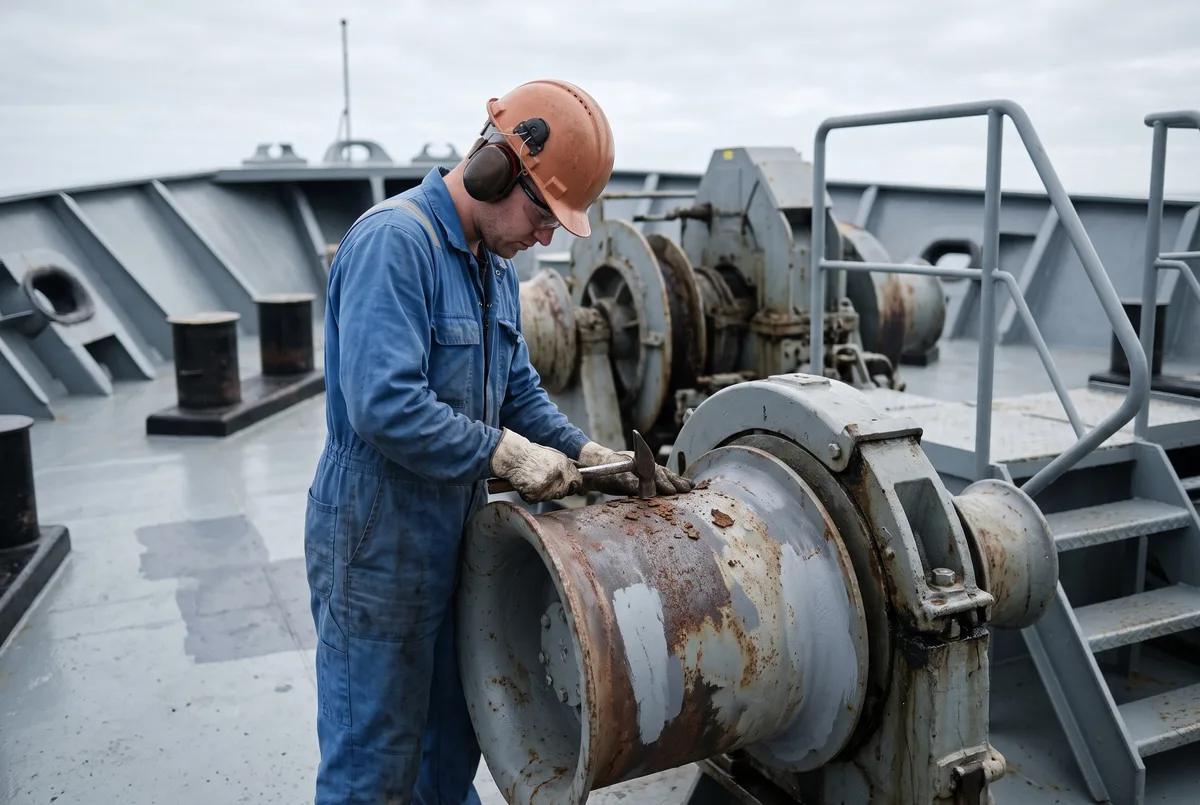
The ITF Uniform TCC scale has applied since 1 January 2026; the figures come from Annex 2 of the standard agreement for flag-of-convenience vessels. US dollars per month.
| Rank | Basic wage | Overtime | Leave pay | Total |
|---|---|---|---|---|
| Bosun, chief cook | 1,031 | 766 | 241 | 2,164 |
| Able seafarer (AB), motorman | 923 | 686 | 215 | 1,950 |
| Ordinary seaman (OS), wiper | 687 | 510 | 160 | 1,483 |
The agreement sets a floor. The vacancy market runs higher. The crewing portal Maritime Zone aggregates rates by rank and vessel type from a sample of more than 100,000 verified job postings over 12 months. By this data, an AB earns from USD 1,756 a month, an OS roughly USD 1,017 to 1,506. The spread by vessel type is broken down below.
A cadet on a training placement doesn't fall under this scale. A cadet receives a stipend from the company rather than a wage, and each shipowner sets the amount independently; the ITF standard agreement has no such position.
The average wage in Ukraine in May 2026 was UAH 30,961 (the hryvnia, Ukraine's national currency), according to the State Statistics Service of Ukraine, the country's national statistics agency. A direct comparison doesn't hold: onshore work is paid twelve months a year, a seafarer only for the months under contract.
Entry into the profession runs through a rating position. Most start with the seaman second class course, the OS row in the table above.
For more on what an able seaman actually does and which documents the job requires, see the separate article on the able seaman position.
Where the Line Between Ratings and Officers Sits
Ratings are the deck and engine crew: seamen, motormen, the bosun, the cook. Officers are the watchkeeping mates and engineers, the chief officer, chief engineer, and master. The line runs not through sea time but through the certificate: an officer's post requires a state-issued certificate of competency and training at operational or management level under regulations II/1, II/2, III/1, and III/2 of the STCW Convention.
Officer pay is structured differently and covered separately in officer salaries on ships. What matters here is different: the market shortage sits in the officer ranks, and the gap between two adjacent officer grades can exceed the entire spread within the ratings.
Vessel Type: Tanker, Bulk Carrier, Container Ship, Cruise Ship
The same rank is paid differently on different vessels. By Maritime Zone data, an AB earns around USD 1,756 on a bulk carrier, USD 1,799 on a container ship, and up to USD 3,022 on an AHTS (anchor handling tug supply) vessel, nearly double for the same entry in the service record. In officer ranks, the gap between a bulk carrier and a tanker reaches up to 1.5 times.
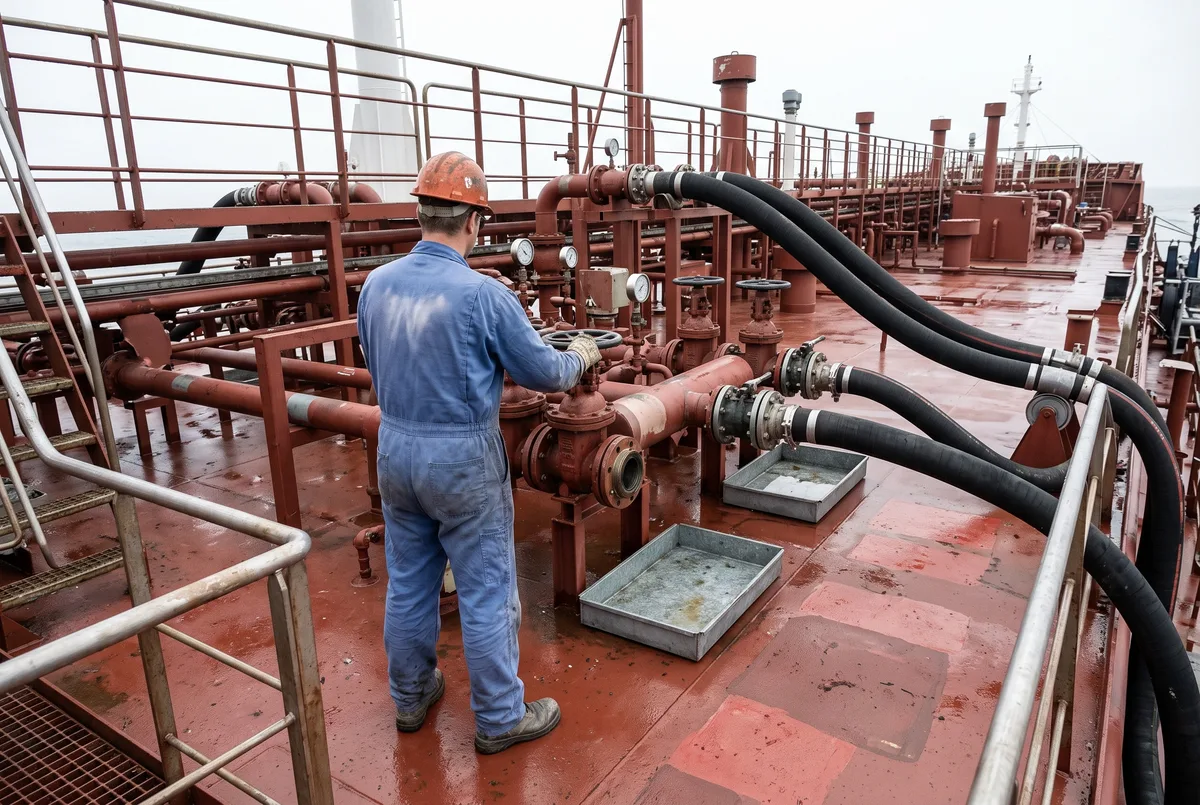
Tankers and gas carriers sit at the top of this range. Hazardous cargo, strict procedures, regular charterer vetting inspections. The crew must complete specific cargo operations training under the STCW Convention, chapter V: regulation V/1-1 for oil and chemical tankers, regulation V/1-2 for gas carriers. Without these certificates, no amount of experience gets a seafarer onto a tanker, and it all starts with basic training for tanker operations.
Container ships and bulk carriers are the working middle of the market, a convenient benchmark for checking a rate against. A container ship runs a tight port-call schedule with a heavier bridge workload; a bulk carrier means longer passages and less paperwork.
Offshore stands apart. Ratings on AHTS supply vessels earn noticeably above the fleet average, but the certificate requirements are their own.
How Pay Is Calculated: Basic Wage, Overtime, Leave Pay
A contract almost never states a single figure. It states a structure, and it pays to know how to read it.
Basic wage is the monthly pay for service. The ILO minimum described above is tied to this figure.
Guaranteed overtime: under clause 6.2 of the ITF Uniform TCC agreement, every seafarer is paid for at least 103 hours of guaranteed overtime a month, at 1.25 times the basic hourly rate; ITF's own wage guidance confirms the same figure. In the 2026 scale, an AB's overtime comes to USD 686 against a basic wage of USD 923. Close to half the total comes from outside the base pay.
Leave pay accrues for every month worked. Under the Maritime Labour Convention, 2006 (MLC 2006), Standard A2.4, paid leave accrues at a minimum of 2.5 calendar days per month of service, around 30 days a year.
On top of this come allowances: for vessel type, trading area, combined duties. Together, this is the total monthly, the figure a crewing agent quotes on the phone. When comparing two offers, the number that matters is the total, and how many overtime hours it actually covers, not the basic wage.
Working hours are capped regardless. The STCW Code, section A-VIII/1, sets a minimum of 10 hours of rest in any 24-hour period and 77 hours in any 7-day period.
What Happens to Pay Between Contracts, and What a Seafarer's Pension Looks Like
Between contracts, a seafarer generally receives nothing unless the contract states otherwise. Annual income is therefore not "rate × 12" but "rate × months on board." On a four-months-on, two-months-off rotation, that works out to about eight paid months a year.
Some companies match the time off to the time on board: four months at sea, four months at home. On that rotation, annual income roughly halves, and a straight comparison of the monthly rate against an onshore salary stops working.
The adjustment also runs the other way. On board, a seafarer carries no living costs: accommodation, food, and drinking water are the shipowner's obligation under MLC 2006. Rent, transport, and groceries never come out of the rate, so more of a sea wage typically stays in hand than the same figure earned onshore.
The maximum length of continuous service is also capped, though the exact figure is disputed. Standards A2.4 and A2.5.2 of MLC 2006 — leave accrued at 2.5 days per month of service, repatriation before 12 months elapse — are often read as implying an "11-month limit," but that arithmetic is approximate, and maritime administrations interpret it differently. The Australian Maritime Safety Authority (AMSA), for example, treats time on board beyond 13 months as a breach — that is an enforcement threshold, not the MLC norm itself.
The pension picture is worse than most seafarers expect. When sailing under a foreign flag, the shipowner pays no contributions into the Ukrainian Pension Fund: insured service years don't accrue on their own. This gets closed by voluntarily paying the unified social contribution under an agreement with the Pension Fund; a period covered this way counts toward the record. The requirement rises every year. According to the Pension Fund of Ukraine, the country's state pension agency, retiring at 60 in 2026 requires at least 33 years of insured service, at 63 it's 23 years, at 65 it's 15 years. This gets worked out in the first years of a career, not five years before retirement, when there's no time left to close the gap.
If Wages Go Unpaid
Under the 2014 amendments to MLC 2006, every vessel flying the flag of a ratifying state must carry financial security for crew abandonment. As ITF explains, the insurance certificate must be posted on board in English with the insurer's contact details, and cover extends to up to four months of unpaid wages and other entitlements due under the contract or collective agreement, plus repatriation, food, water, accommodation, and essential medical care.
Crew abandonment is defined as a shipowner failing to cover repatriation costs, leaving a seafarer without maintenance, or failing to pay contracted wages for at least two months.
What to do is not wait. ITF states it in plain words: DO NOT WAIT. Contact the insurer using the details on the posted certificate, and at the same time write to ITF at abandonment@itf.org.uk. The report stays confidential.
What Drives Income Growth
Every next rank is a state-issued certificate plus a set of mandatory STCW certificates. Without them, the position stays closed no matter how much sea time is on record.

English gets checked at the door: Marlins and CES tests are part of the screening process at most companies, and a weak result cuts a candidate before an interview with the superintendent.
Specialisation moves a seafarer into a different segment. Tanker certificates, simulator training, electro-technical qualifications: none of this changes the rank, it changes the market a seafarer is competing in.
What a training centre covers and what depends on a state authority and sea time is visible in the courses catalogue for seafarers: a training centre provides STCW training and certificates, while diplomas and the seafarer's identity document are issued by the state.
Frequently Asked Questions
How much do seafarers earn per contract
The monthly total from the contract multiplied by its length. At the AB rate under the 2026 ITF Uniform TCC scale, USD 1,950, a four-month contract works out to around USD 7,800 before deductions.
What is the minimum seafarer wage
The minimum basic wage for an AB under the ILO scale is USD 690 a month from 1 January 2026. This is the basic rate, before overtime and leave pay.
How does a seafarer's pay in Ukraine compare with onshore work
The average wage in Ukraine in May 2026 was UAH 30,961. Ratings' pay under ITF agreements for 2026 starts at around USD 1,483 a month, but this gets paid only for months under contract, so the correct comparison is annual income.
Do tankers really pay more
For the same rank, yes: tankers, chemical tankers, and gas carriers pay more than bulk carriers, and in officer ranks the gap reaches up to 1.5 times. The trade-off is mandatory training under chapter V of the STCW Convention and stricter charterer inspections.
What is a seafarer's pension
There is no single "seafarer's pension." Working under a foreign flag without paying contributions means no Ukrainian insured service accrues. In 2026, retiring at 60 requires 33 years of insured service.
Need to update documents or choose courses for a new contract?
Fill out the seafarer application — our specialists will help determine the required certificate package.
Or contact us directly:
Working hours:
Monday—Thursday: 9:00 AM to 5:00 PM
Friday: 9:00 AM to 4:00 PM
Saturday and Sunday — days off