
Medical First Aid on Board Ship
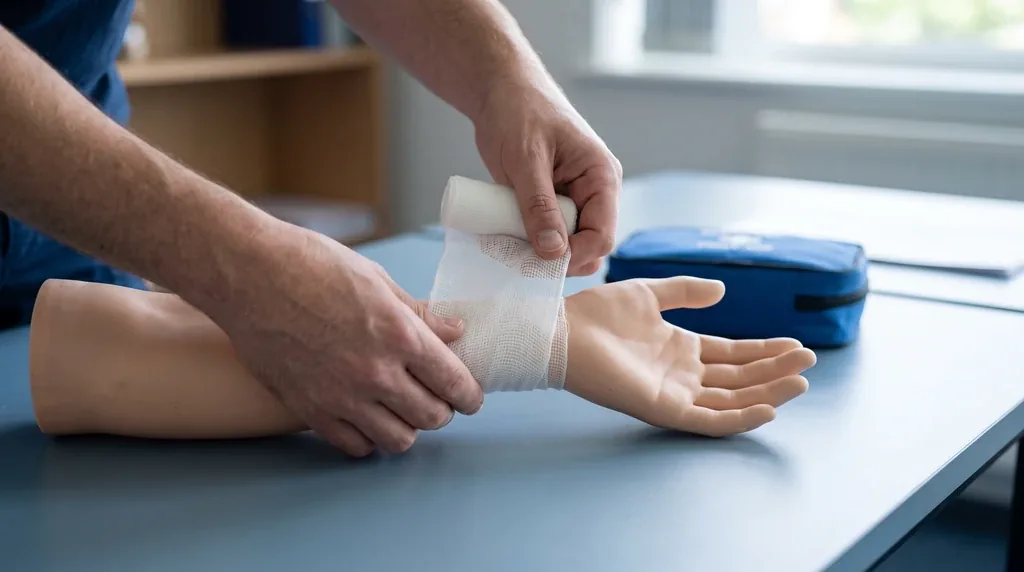
The STCW Convention sets out three levels of medical training: elementary first aid within Basic Safety Training (BST) — for every seafarer with safety-related duties; Medical First Aid under Regulation VI/4 — for those designated to provide it on board; and Medical Care — for whoever is responsible for the sick and for medicines when the ship carries no doctor. The Maritime Labour Convention, 2006 (MLC 2006) obliges the flag State to require a ship without a doctor to have either at least one seafarer in charge of medical care or at least one seafarer competent to provide medical first aid; the level of training is specified by national law, taking into account the duration, nature and conditions of the voyage and the number of seafarers on board.
Three Levels of Medical Training Under STCW
Level 1. Elementary first aid. Paragraph 2 of Section A-VI/1 of the STCW Code requires seafarers in any position involving safety or pollution-prevention duties to complete basic training under four tables, the third of which is Table A-VI/1-3 "Elementary first aid": taking immediate action on encountering an accident or other medical emergency. This is part of BST, not a stand-alone medical certificate.
Level 2. Medical First Aid. Regulation VI/4, paragraph 1: seafarers designated to provide medical first aid on board must meet the standard of paragraphs 1–3 of Section A-VI/4. Paragraph 2 of the Section sets the bar: enough knowledge for prompt, effective action in the case of accidents or illnesses typical of shipboard conditions.
Level 3. Medical Care. Regulation VI/4, paragraph 2: seafarers designated to take responsibility for medical care on board must meet the standard of paragraphs 4–6 of Section A-VI/4 and Table A-VI/4-2.
Under paragraph 3 of Regulation VI/4, if this training is not part of the qualification requirements for a professional certificate of competency, the seafarer is issued a certificate of proficiency stating the course completed.
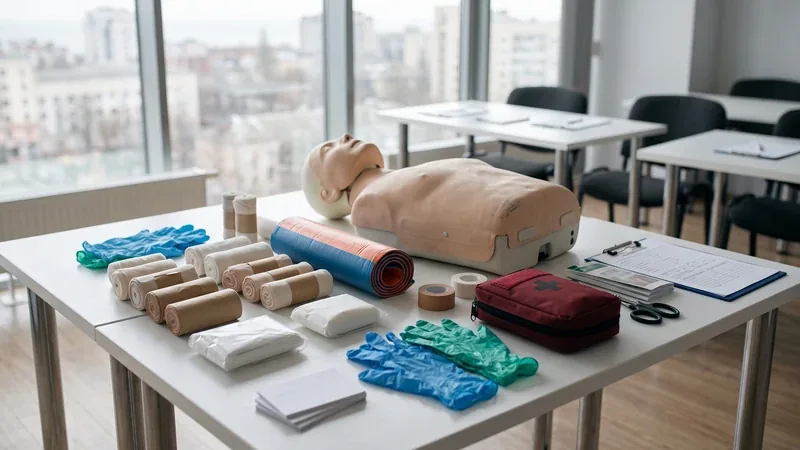
What Medical First Aid Covers Under Table A-VI/4-1
Table A-VI/4-1 has a single competence area — apply immediate first aid in the event of accident or illness on board — and a specific list of knowledge, understanding and proficiency in column 2:
- First-aid kit;
- body structure and function;
- toxicological hazards on board, including use of the Medical First Aid Guide for Use in Accidents Involving Dangerous Goods (MFAG) or its national equivalent;
- examination of casualty or patient;
- spinal injuries;
- burns, scalds and effects of heat and cold;
- fractures, dislocations and muscular injuries;
- medical care of rescued persons;
- radio medical advice;
- pharmacology;
- sterilization;
- cardiac arrest, drowning and asphyxia.
Method of demonstrating competence — assessment of evidence obtained from practical instruction (column 3). Column 4 criteria: the identification of probable cause, nature and extent of injuries is prompt, complete and conforms to current first-aid practice; risk of harm to self and to others is minimised at all times; treatment of injuries and the patient's condition is appropriate and conforms to recognised first-aid practice and international guidelines. Guidance section B-VI/4 adds that training programmes under Table A-VI/4-1 should, as appropriate, take account of the current edition of the International Medical Guide for Ships.
How Medical Care Differs From Medical First Aid
The difference is not in the course name but in the scope of responsibility. Medical First Aid means stabilise, do no harm, and get in touch with the shore. Medical Care means managing the patient on board for as long as they stay there.
Table A-VI/4-2 has two competence areas. The first is medical care of the sick and injured on board: head and spinal injuries, bleeding, burns and frostbite, wounds and infections, pain relief, applying and removing sutures and staples, acute abdominal pain, minor surgical procedures, infectious and tropical diseases, dental care, gynaecology, pregnancy and childbirth, death at sea, hygiene and prevention, and keeping medical records. The second is participation in coordinated schemes for medical assistance to ships: radio medical advice, transportation of the sick, including helicopter evacuation, and liaison with port medical services. Method of demonstrating competence — practical instruction and demonstration and, wherever practicable, approved practical experience in a hospital. The criteria expressly require that the dosage and application of drugs comply with manufacturers' recommendations and accepted medical practice.
Compare that with Table A-VI/4-1: no suturing, no surgery, no childbirth, no medical records. What it does have is what's needed in the first few minutes: examination, cardiac arrest, drowning, burns, fractures.
| Question | Elementary First Aid | Medical First Aid | Medical Care |
|---|---|---|---|
| Legal basis | Regulation VI/1; A-VI/1, para. 2; Table A-VI/1-3 | Regulation VI/4, para. 1; A-VI/4, paras 1–3; Table A-VI/4-1 | Regulation VI/4, para. 2; A-VI/4, paras 4–6; Table A-VI/4-2 |
| Who needs it | Every seafarer in a position with safety or pollution-prevention duties | Seafarers designated to provide medical first aid on board | Seafarers designated to carry out medical care duties on board |
| What it covers | Immediate action in case of an accident | Prompt action for injuries and illnesses typical of shipboard conditions; radio medical advice; pharmacology; sterilization | Managing the patient on board the whole time: suturing, minor surgery, infectious diseases, childbirth, medical records; evacuation |
| How it's assessed | Assessment of evidence from approved instruction or an approved course | Assessment of evidence obtained from practical instruction | Practical instruction and demonstration; hospital practice where possible |
| Included in officers' certificates of competency | Yes, as part of basic training | Yes — for certificates under Regulations II/1, II/3, III/1, III/6 (paras 1–3 of Section A-VI/4) | Not mentioned in footnote 5 to B-I/2. A ship without a doctor must carry either a seafarer responsible for medical care or a seafarer competent to provide medical first aid; a separate certificate is issued only if the training is not built into the certificate's qualification requirements |
| Five-year evidence requirement under the Code | Not required for Table A-VI/1-3 | Section A-VI/4 contains no such requirement; MLC Guideline B4.1.1 recommends refresher training roughly every five years | Same: no requirement in A-VI/4; MLC Guideline B4.1.1 recommendation |
| Ukrainian document for ratings | Certificate of proficiency in basic safety training — for all ratings | Certificate of proficiency in providing pre-medical assistance — for those designated to provide medical first aid on board | Certificate of proficiency in medical care — for those designated to carry out medical care duties |
Who Needs Medical First Aid: Three Answers
Officers. For certificates of competency under Regulations II/1, II/3, III/1 and III/6, competence in paragraphs 1–3 of Section A-VI/4 is a direct requirement: for a candidate for the certificate of officer in charge of a navigational watch on ships of 500 gross tonnage or more, of officer in charge of a navigational watch and master on ships below 500 in near-coastal voyages, of officer in charge of an engineering watch, and of electro-technical officer. Guidance section B-I/2 spells out the consequence: holders of certificates issued under the list of regulations that includes II/1, II/2, II/3, III/1, III/2, III/3, III/6 and VII/2 do not need a separate certificate of proficiency in medical first aid. Medical care is not on that list: a ship without a doctor must carry either a seafarer responsible for medical care or one competent to provide medical first aid, and a separate certificate of proficiency is issued precisely when this training is not built into the certificate's qualification requirements.
Ratings. Regulation VI/4 speaks of those "designated," not of positions. In Ukraine, the Rules for Certification of Ratings of Crews of Seagoing Vessels tie the document to the designation: the certificate of proficiency in providing pre-medical assistance is issued to ratings designated to provide medical first aid on board; the certificate in medical care — to those designated to carry out medical care duties. The baseline qualification requirements for a rating forming part of a navigational watch, a motorman or a ship's electrician do not include these certificates. So for ratings, medical first aid is not a universal requirement but a document tied to a specific designation, or a requirement of a particular company.
A ship without a doctor — why two levels at all. Standard A4.1 of MLC 2006, paragraph 4(c), requires national law of the flag State to make it compulsory for ships without a doctor to carry either at least one seafarer responsible for medical care and the administering of medicine as part of their regular duties, or at least one seafarer competent to provide medical first aid; the former complete medical care training under STCW, the latter medical first aid training under STCW, and the level of training required is determined by national law having regard to matters such as the duration, nature and conditions of the voyage and the number of seafarers on board. Guideline B4.1.1 offers a benchmark: ships that can normally reach qualified medical care within eight hours should carry at least one designated seafarer trained in medical first aid; all others should carry at least one trained in medical care. This is a recommendation ("should"); the mandatory level of training is set by the national law of the flag State. States that have ratified MLC must ensure that ships flying the flag of a State that has not ratified it do not receive more favourable treatment — that is, such ships are inspected against the same requirements in the ports of States that have ratified MLC.
How to Work Out Which Course You Need
- Look at the position, not the course name. For certificates under Regulations II/1, II/3, III/1 or III/6, medical first aid is already among the requirements — check with the administration whether a separate document is still required.
- Find out whether the ship carries a doctor and who is responsible for medicine if it doesn't. If you're the one designated responsible for medical care and medicines, that's the A-VI/4-2 level, not first aid.
- Check what the company requires for your position. Medical First Aid for a deck rating or a motorman is a company or flag requirement tied to a specific position; it is not in the Ukrainian baseline requirements for those positions.
- Don't confuse this with BST. Elementary first aid within basic training does not replace the certificate under Regulation VI/4, and vice versa.
- Check the date. The Code sets no five-year evidence requirement for A-VI/4, but the company and the flag may rely on the B4.1.1 recommendation to refresh training roughly every five years.
Frequently Asked Questions
Does every seafarer need medical first aid?
As a separate certificate — no. Regulation VI/4, paragraph 1, applies to seafarers designated to provide medical first aid on board. The general minimum for everyone whose duties involve safety is elementary first aid within BST.
Can you go straight to Medical Care, skipping first aid?
The Convention describes two different standards and does not require one as a condition for the other. Training centres may set their own course sequence — check the admission conditions on the specific course page.
Do you need to renew a Medical First Aid certificate?
Section A-VI/4 contains no five-year evidence requirement, unlike Sections A-VI/1–A-VI/3. MLC Guideline B4.1.1 recommends refresher training roughly every five years; whether that's mandatory is for the flag and the company to decide.
Medical First Aid at AVANT
The AVANT training centre runs a first aid training course. For conditions, format, duration and the programme, see the course page.
The next level is medical care (Regulation VI/4, paragraph 2) — the Medical Care Onboard Ship Training Course. For practical classes in first aid and medical care, the centre has a Training Class for First Aid and Medical Care. The baseline level — elementary first aid — is part of Basic Safety Training (BST).
Summary
Elementary first aid is for everyone, within BST. Medical First Aid is for those designated to provide it on board; for officers it is built into the certificate of competency. Medical Care is for whoever on a ship without a doctor is responsible for the patient and for medicines. Which level you need is decided by your position, the type of ship, the flag and the company — find out before signing a contract. For first aid training at the AVANT training centre, see the first aid training course page.
Specific requirements for a position are set by the flag administration, the company and the ship's documents.