
Survival Craft and Rescue Boats Certificate
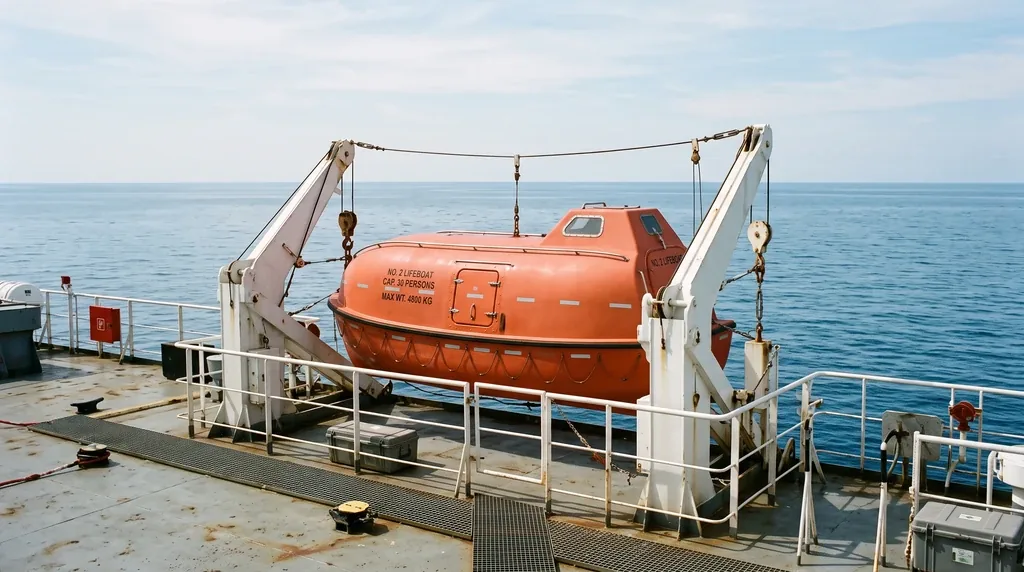
A certificate of proficiency in survival craft and rescue boats is issued to ratings who have been assigned to launch and recover the ship's life-saving appliances and to operate them, while for officers it is one of the documents required for the award of a rank. It can be obtained from the age of 18 after 12 months of approved seagoing service, or after an approved course plus 6 months of service. In Ukraine the certificate is valid for five years.
What This Document Is Called
One document, three names. Per the official Ukrainian translation of the STCW Convention, it is the "certificate of proficiency in survival craft and rescue boats other than fast rescue boats," as worded in paragraph 1 of Regulation VI/2. Under Ukrainian legislation — the Regulation approved by Cabinet of Ministers Resolution No. 1499 of 30 December 2022 — it is the "certificate of proficiency in personal life-saving appliances and lifeboats (other than fast rescue craft)." The course page gives the certificate's English name as Proficiency in Survival Crafts and Rescue Boats Other Than Fast Rescue Boats; the short form is PSCRB.
Who Needs It
Regulation VI/2 covers two documents at once: paragraph 1 — ordinary survival craft, liferafts and rescue boats; paragraph 2 — fast rescue boats, a separate certificate with its own conditions.
Among ratings, the certificate is issued to those assigned "to launch and recover the ship's life-saving appliances and to operate them" — as worded in the Rules for Certification of Ratings approved by Order of the Ministry for Communities, Territories and Infrastructure Development No. 784 of 5 September 2023. For the certificate of a watchkeeping or qualified able seaman it is not a mandatory condition: for a watchkeeping able seaman, only two other safety certificates are required — under Regulation VI/1 and on ship security familiarization — while a qualified able seaman must hold the watchkeeping able seaman certificate.
For officers the picture is different. Among the documents needed for the award of officer in charge of a navigational watch, this certificate is included, but it is not required for five years from the date of a diploma in maritime professional pre-higher or higher education. A similar rule in paragraph 75 of the Regulation applies to professional diplomas: diplomas of masters, mates, engineers and electro-technical officers, together with endorsements to them, certify this training for five years after issue.
For ratings, the rule of thumb is: assigned to the boat crew — the certificate is required.
Conditions for Obtaining It
Regulation VI/2, paragraph 1, sets three conditions. Age — not less than 18. Sea service — approved seagoing service of not less than 12 months, or an approved training course plus approved seagoing service of not less than six months. Competence — meeting the standard set out in paragraphs 1–4 of Section A-VI/2 of the STCW Code.
The second condition is genuinely an "or." The course does not replace sea service in full — it shortens it from twelve months to six.
Part B of the Code (guidance, not a mandatory requirement) adds that before training starts a candidate should meet medical fitness requirements, particularly for eyesight and hearing.
How the Assessment Works
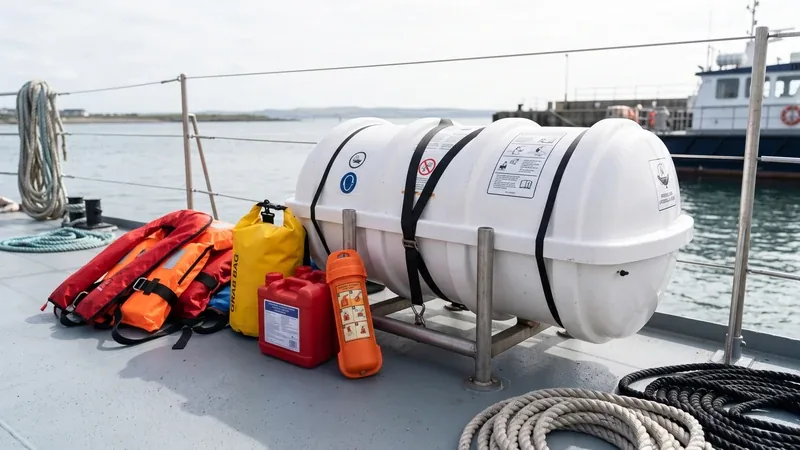
A candidate must demonstrate competence in the areas listed in column 1 of Table A-VI/2-1. The required level of knowledge is enough to launch a survival craft, liferaft or rescue boat and to take command of it in an emergency.
Evidence of competence has two parts, and both are mandatory: practical demonstration by the methods in column 3 and the criteria in column 4 of the table, "and" an examination or continuous assessment during an approved training programme. The practical part for the first competence area is carried out on an inflatable liferaft and on an open or enclosed powered lifeboat, or on an approved simulator; for the second — on an open or enclosed lifeboat; for the fourth — with portable radio equipment and signalling apparatus. This standard leaves no room for a certificate obtained "fully online."
Five Areas That Are Tested
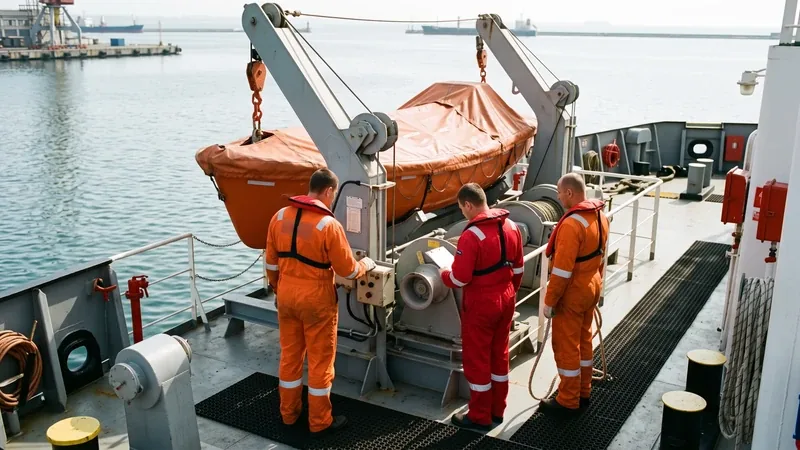
Table A-VI/2-1 sets the minimum standard of competence across four columns: competence area, knowledge, methods of demonstration, criteria for evaluation. There are exactly five areas — the table for fast rescue boats, A-VI/2-2, begins immediately after them in the text.
Take Charge of a Survival Craft, Liferaft or Rescue Boat During and After Launching
This heading is a shortened wording of the first competence area in column 1, which in full reads: taking charge of a survival craft, a liferaft or a rescue boat during and after their launching. Knowledge: construction and equipment of survival craft, liferafts and rescue boats; types of launching appliances; launching and recovery procedures in heavy swell; actions after abandoning ship; the dangers of release gear operated under load; maintenance. In practice the candidate rights an inflated liferaft while wearing a lifejacket; reads the capacity markings; gives commands for boarding, lowering, moving away from the ship's side and disembarking; prepares and launches a lifeboat or liferaft, and operates release gear both unloaded and loaded; safely recovers a lifeboat, liferaft and rescue boat. The assessment checks whether the launch took the equipment's limitations into account, whether danger during abandonment was minimised, whether the craft were recovered within the equipment's limitations, and whether the equipment is operated in accordance with the manufacturer's instructions for launching and stowing.
Operate a Survival Craft Engine
Starting and running the engine and its associated equipment, including the fire extinguisher provided; demonstrated on an open or enclosed lifeboat; the criterion is that the engine runs well enough for the craft to be manoeuvred.
Manage Survivors and Survival Craft After Abandoning Ship
Heavy weather; painter, sea anchor and other equipment; rationing food and water; actions to improve visibility; helicopter rescue; hypothermia and its prevention, protective clothing and thermal protective aids; towing liferafts and recovering people from the water; deliberate beaching. The candidate demonstrates the ability to row and steer a boat by compass, to use items of equipment, and to rig locating devices; the criterion is that survival actions are managed appropriately to the circumstances.
Use Locating Devices
Radio equipment for survival craft, including satellite EPIRBs (emergency position-indicating radio beacons) and search and rescue transponders (SARTs); pyrotechnic distress signals. Demonstrated with portable radio equipment and signalling apparatus, together with pyrotechnics.
Apply First Aid to Survivors
The first-aid kit and methods of resuscitation; care of the injured, controlling bleeding, treating shock; demonstrated by handling people who have sustained injuries, both during and after abandoning ship. The centre also has a separate course, Elementary First Aid Training Course.
The table sets no specific norms for food or water per person, liferaft capacity or equipment inventory; the technical requirements for the craft themselves are collected in a separate IMO publication — the International Life-Saving Appliance Code (LSA Code).
Validity Period and How to Renew It
The STCW Code requires a seafarer holding this qualification to provide evidence that, "during the preceding five years," they have maintained the standard of competence set out in column 1 of Table A-VI/2-1. In Ukraine the validity period is set directly by paragraph 75 of Regulation No. 1499 — five years. In the list of qualification documents for officers (other than on fishing vessels and vessels in sheltered waters), the certificate under Regulation VI/2 is subject to registration in the State Register of Seafarers' Documents and to revalidation.
Renewal is not governed by Regulation I/11. That rule, on revalidating certificates at intervals not exceeding five years, applies to certificates issued under all chapters of the Convention "except Chapter VI." The source of the five-year cycle for this certificate is Section A-VI/2, paragraph 5, together with the Ukrainian Regulation.
A Party to the Convention may credit training and sea service towards maintaining competence — but only in the listed areas, and pyrotechnics are explicitly excluded from that list. Part B adds that participation in onboard drills may be credited in individual areas, but such drills may only be conducted in favourable weather and where port regulations allow it. Both provisions are a right of the administration, not an obligation; in Ukraine the certificate is subject to revalidation under Annex 1 to Regulation No. 1499.
For officers without the required sea service the rule is stricter: a master or officer (other than on fishing vessels) who lacks the sea service needed to maintain competence undergoes training in personal life-saving appliances and lifeboats again, from the start.
Amendments MSC.560(108), which entered into force on 1 January 2026, concern Section A-VI/1 and do not change Regulation VI/2.
What's Next: Fast Rescue Boats
The certificate under paragraph 1 of Regulation VI/2 is a prerequisite for the next one. A candidate for the certificate of proficiency in fast rescue boats must hold the certificate in survival craft and rescue boats, complete an approved course, and meet the standard set out in paragraphs 7–10 of Section A-VI/2. Without the first document, the second will not be issued.
What This Looks Like at the Training Centre
The AVANT training centre runs the Personal Survival and Lifeboats Training Course. At the centre's training ship there is a simulator for launching and recovering a lifeboat, plus liferafts, and its listed programmes include training under Section A-VI/2 and Table A-VI/2-1. For the conditions, format, duration and programme, see the course page.
Two things are worth keeping separate: the course page describes the training, while issuing the certificate itself is governed by the Convention's conditions — 18 years of age, sea service and demonstrated competence.
Frequently Asked Questions
Does every rating need this certificate?
No. Among ratings, it is issued to those assigned to launch and recover the ship's life-saving appliances and operate them; for the certificate of a watchkeeping or qualified able seaman it is not a mandatory condition.
Can the certificate be obtained without sea service?
No. The minimum is an approved course plus six months of approved sea service; without the course it is twelve months.
Can it all be done remotely?
Not the practical part. The Code requires practical demonstration on an inflatable liferaft and an open or enclosed powered lifeboat, or on an approved simulator, plus an examination or continuous assessment.
How long is the certificate valid, and what happens after five years?
In Ukraine — five years. After that the certificate is subject to revalidation, and officers without the required sea service undergo the training again.
Did the rules change on 1 January 2026?
Not for this certificate. Amendments MSC.560(108) concern Section A-VI/1, not Regulation VI/2.
If you have been assigned to the boat crew on board, or your next rank requires this document, training under Regulation VI/2 and other safety courses are listed in the training centre's course catalogue.
Confirm the list of documents required for a specific position and flag with the maritime administration and the crewing agency.