
What Is STCW Basic Safety Training (BST)
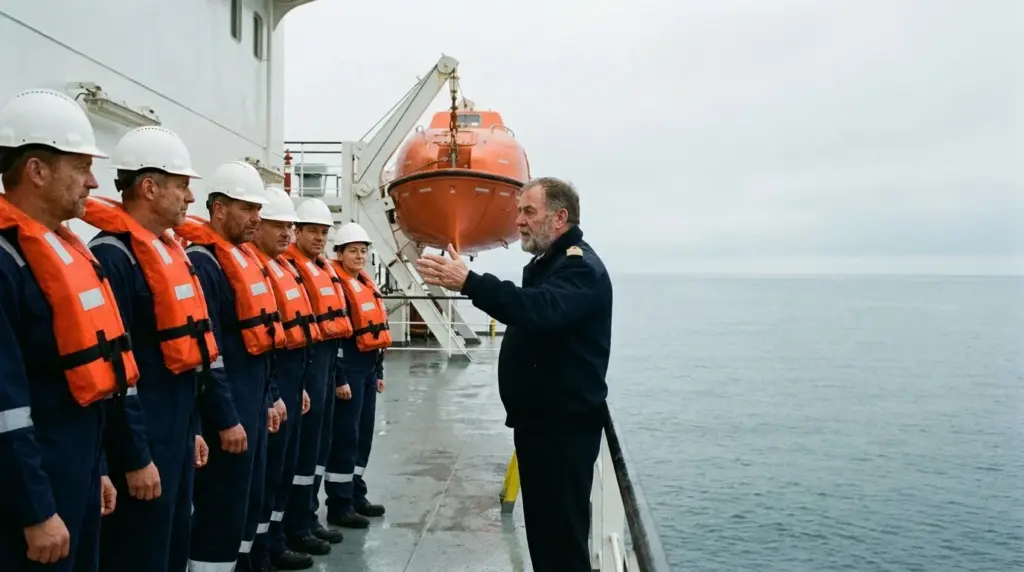
Basic Safety Training (BST), also called STCW basic training, is the safety training that the International Convention on Standards of Training, Certification and Watchkeeping for Seafarers (STCW) requires of every seafarer whose duties on board relate to safety or pollution prevention. The international minimum is set by STCW Regulation VI/1 and Section A-VI/1 of the STCW Code: four elements — personal survival techniques, fire prevention and fire fighting, elementary first aid, and personal safety and social responsibilities. Each element has its own competence table, and attending a course is not enough: a seafarer must prove that the standard has been achieved — by demonstration, and by examination or continuous assessment.
Where the BST Requirement Comes From
The STCW Convention, as amended by the 2010 Manila amendments, establishes in Regulation VI/1 that seafarers shall receive safety familiarization and basic training or instruction in accordance with Section A-VI/1 of the STCW Code and shall meet the standard of competence specified in that section. Where basic training is not included in the qualification for the certificate to be issued, a certificate of proficiency is issued, indicating that the holder has attended the course in basic training. Ukraine is a Party to the Convention, so the official Ukrainian text of the amendments is published on the website of the Verkhovna Rada.
The Maritime Labour Convention, 2006 (MLC 2006) sets the same requirement from the other side: a seafarer shall not be permitted to work on a ship unless they have successfully completed training for personal safety on board ship, and training in accordance with the mandatory instruments adopted by the IMO is considered as meeting this requirement. That is why, in the ports of MLC member States, a port State control officer may also check that a seafarer has this training: seafarers' qualifications are among the areas of detailed inspection.
Familiarization and Basic Training Are Not the Same
Section A-VI/1 describes two different levels, and the two should not be confused.
Safety familiarization training concerns all persons on board other than passengers — even before they are assigned to the ship. It may be an approved course or sufficient information and instruction, and it must ensure seven things: the person can communicate with others on board on elementary safety matters and understands safety information symbols, signs and alarm signals; knows what to do if a person falls overboard, if fire or smoke is detected, or if the fire or abandon ship alarm is sounded; can identify muster and embarkation stations and emergency escape routes; can locate and don a lifejacket; can raise the alarm and has basic knowledge of the use of portable fire extinguishers; can take immediate action upon encountering an accident or other medical emergency before seeking further medical assistance on board; and can close and open the fire, weathertight and watertight doors fitted in the particular ship, other than those for hull openings. This part is tied to the specific ship: Regulation I/14 obliges the Administration to require the company to ensure that seafarers, on being assigned to any of its ships, are familiarized with their specific duties and with all ship arrangements, installations, equipment, procedures and ship characteristics relevant to their routine or emergency duties. So a BST certificate does not replace the briefing on board — and the briefing on board does not replace BST.
Basic training is BST itself. It is mandatory for seafarers employed or engaged on board ship in any capacity involving safety or pollution-prevention duties, and it must be completed before they are assigned to any shipboard duties. Its content is the four tables of the Code, and the result is evidence of having achieved the standard of competence in two ways at once: demonstration in accordance with the methods and criteria in columns 3 and 4 of the tables, and examination or continuous assessment as part of an approved training programme.
What the Four BST Elements Cover
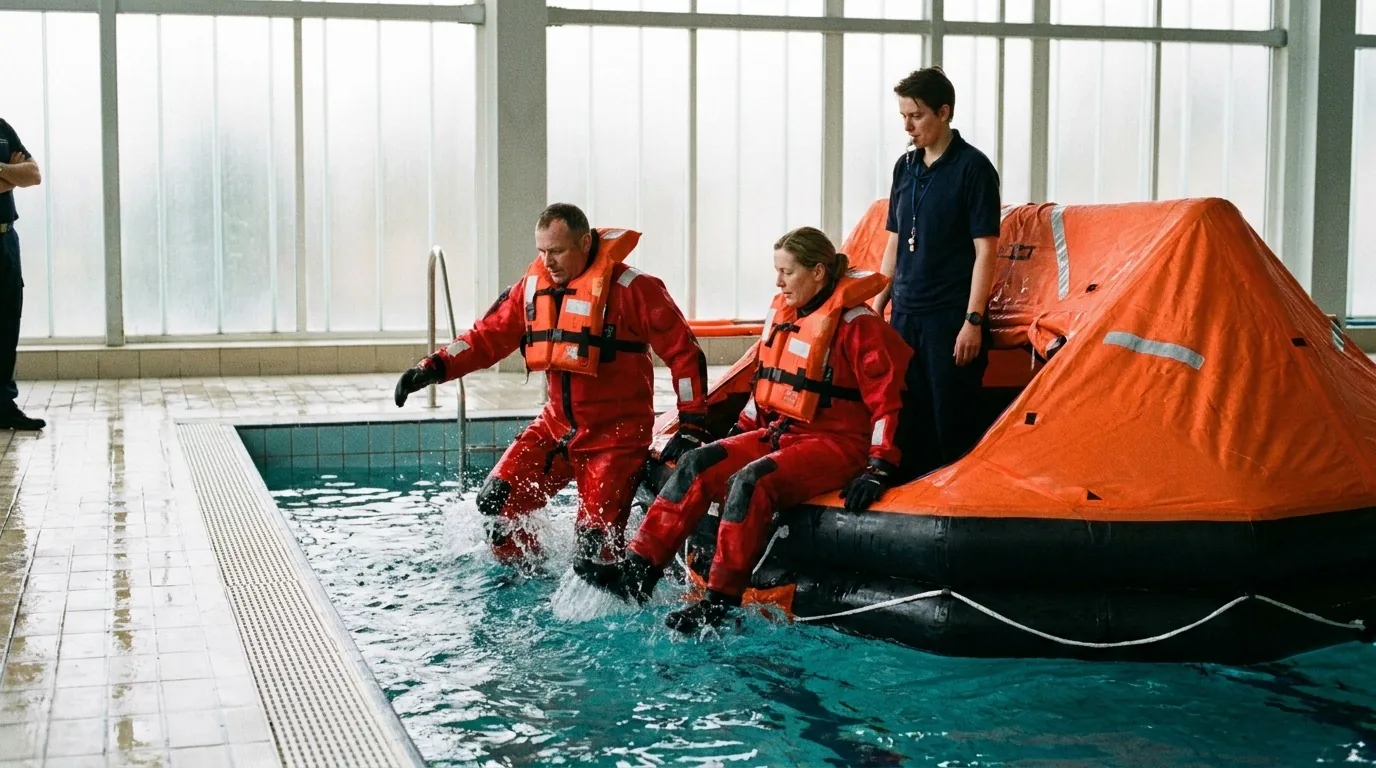
The content of each element is set by Tables A-VI/1-1 to A-VI/1-4 of the STCW Code. This is the international minimum; the specific programme, duration and format depend on the training centre's approved course. The four elements differ in their deadlines: the Code requires evidence of maintaining competence every five years only for the first two tables.
Personal Survival Techniques
STCW Code Table A-VI/1-1. Evidence of maintained competence every five years — required.
Types of emergency situations, types of survival craft, principles of survival. Practical demonstration: donning a lifejacket and an immersion suit, safely jumping into the water from a height, righting an inverted liferaft, swimming while wearing a lifejacket, boarding a survival craft from the ship and from the water, initial actions on boarding, streaming a sea-anchor, survival craft equipment and location devices, including radio equipment.
Fire Prevention and Fire Fighting
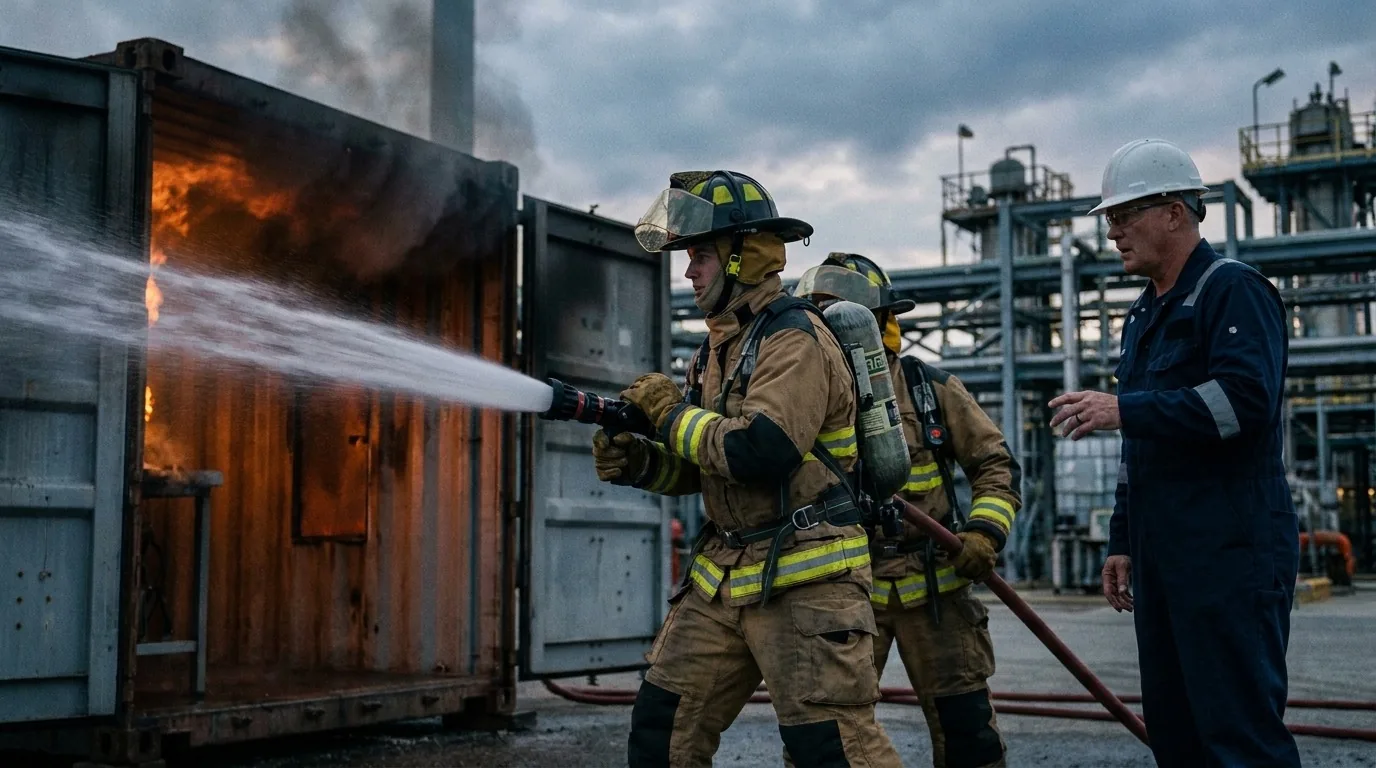
STCW Code Table A-VI/1-2. Evidence of maintained competence every five years — required.
Shipboard fire-fighting organization, the fire triangle, classes of fire and extinguishing agents, fire detection and alarm systems. Practical demonstration in conditions as close to real as possible (for example, simulated shipboard conditions) and, wherever practicable, in darkness: portable fire extinguishers of various types, self-contained breathing apparatus, extinguishing small and larger fires with water, foam and powder, working in a smoke-filled enclosed space, and rescuing a person.
Elementary First Aid
STCW Code Table A-VI/1-3. Evidence of maintained competence every five years — not required: the table is not included in paragraph 3 of Section A-VI/1.
Assessing the needs of casualties and threats to one's own safety; body structure; immediate measures: positioning the casualty, applying resuscitation techniques, controlling bleeding, measures for shock, burns and scalds, and electric shock.
Personal Safety and Social Responsibilities
STCW Code Table A-VI/1-4. Evidence of maintained competence every five years — not required: the table is not included in paragraph 3 of Section A-VI/1.
Complying with emergency procedures (the muster list); preventing pollution of the marine environment; safe working practices; communication and human relationships on board; fatigue management; and, from 1 January 2026, contributing to the prevention of and response to violence and harassment, including sexual harassment, bullying and sexual assault.
By IMO Maritime Safety Committee resolution MSC.560(108), adopted on 23 May 2024, Table A-VI/1-4 was replaced by a new version with the competence "Contribute to the prevention of and response to violence and harassment, including sexual harassment, bullying and sexual assault". The amendments entered into force on 1 January 2026. If you are taking BST now, make sure the course programme includes this element; if you completed the course earlier, ask the company whether a supplement is needed.
How Long BST Remains Valid and How to Prove Your Skills
The STCW Code does not set a "BST certificate validity" as a single date for all four elements. Paragraph 3 of Section A-VI/1 requires something else: seafarers qualified in basic training must provide evidence of having maintained the required standard of competence within the previous five years under Tables A-VI/1-1 and A-VI/1-2 — survival techniques and fire fighting. Elementary first aid and personal safety are not part of this requirement.
Paragraph 4 of the same section allows Parties to accept onboard training and experience for a separate list of elements (for survival — from donning a lifejacket to operating location devices, including radio equipment; for fire — using breathing apparatus and rescue in a smoke-filled space). But this is a "may", not a "shall": whether a specific flag and company accept onboard training instead of a course is something to find out before the voyage.
The Ukrainian Administration has settled the validity question directly: the certificate of proficiency in basic safety training is valid for five years — this is set by the Regulations on Ranks of Ship Officers (para. 74), to which the Rules for certification of ratings also refer. So the wording "the certificate is valid for 5 years" is literally correct for a Ukrainian document, while for documents of other administrations it should be read like this: after five years you will need evidence of maintained skills in two elements, and you should check in what form it is accepted for the ship you are joining.
Ukrainian Documents on Safety Training
In Ukraine, safety training of ratings is certified by certificates of proficiency in accordance with the Rules for certification of ratings of seagoing ships' crews. The certificate of proficiency in basic safety training is issued to all ratings; there are also separate certificates in survival craft and rescue boats, in advanced fire fighting, in medical first aid and in medical care — they are issued only to those assigned to the relevant duties. The certificate in basic safety training, together with the certificate in security-awareness training, is among the qualification requirements for obtaining certificates of proficiency as a rating forming part of a navigational watch, a rating forming part of an engineering watch, an electro-technical rating (ship's electrician) and a ship's cook.
For officers, the procedure is set by the Regulations on Ranks of Ship Officers: the certificate in basic safety training is required for the ranks of officer in charge of a navigational watch, officer in charge of an engineering watch and electro-technical officer, except during the first five years after the issue of the maritime education diploma, while certificates of competency of masters, deck officers, engineer officers and electro-technical officers and their endorsements certify completion of this training for five years after issue.
What to Check Before the Voyage
Check before signing the contract:
- Compliance with the standard. The certificate must state the regulation of the Convention or the section of the Code under which it was issued — for BST, this is Regulation VI/1 and Section A-VI/1 of the STCW Code. Also make sure the course covered all four tables, not just some of them.
- Recognition by the flag. Does the Administration of the flag of the ship you are joining accept a document issued by your training centre or your Administration? The certificate itself does not settle this — it is a question for the crewing agency or the flag Administration.
- Date of training and the five-year evidence. If about five years have passed since the course, find out in what form the flag and the company accept evidence of maintained competence in survival and fire fighting — and whether they count onboard training.
- The violence and harassment element. Does your training cover the new version of Table A-VI/1-4 under MSC.560(108), in force since 1 January 2026? If the course is older, ask the company whether a supplement is needed.
- Familiarization on the ship. After arriving on board, there should be a briefing on the specific ship — muster stations, escape routes, your duties under the muster list, doors, equipment. This is the company's obligation, not an "extra formality" on your part.
- Related documents. The medical certificate, the certificate in security-awareness training and, for those assigned to special duties, certificates under Regulations VI/2, VI/3, VI/4. What to gather before your first trip to sea is in a separate checklist of items and documents for the voyage.
Frequently Asked Questions
Do I need BST if I am not a deck rating or an engineer but, say, a steward or a cook?
Yes, if your position involves safety or pollution-prevention duties in the operation of the ship. Separately, MLC 2006 requires training for personal safety for any seafarer before they are allowed to work on a ship.
Can BST be completed online only?
The Code requires evidence of competence: demonstration in accordance with the methods and criteria of the tables — including donning an immersion suit, jumping into the water, extinguishing a fire and using breathing apparatus — as well as examination or continuous assessment as part of approved training. Parties may allow seafarers to be trained by distance learning and e-learning in accordance with the standards of Section A-I/6.
Is one certificate enough for all flags?
The Convention sets a single standard of competence, but recognition of a specific document is a decision of each flag Administration and a requirement of each company. Check this for the ship you are joining.
Taking BST at AVANT
The AVANT training centre offers the Basic Safety Training (BST) Course. For conditions, format, duration and the programme, see the course page. How to obtain the certificate at AVANT and which documents you need are on the BST certificate for seafarers page.
If you are assigned to special duties on board, the next step is separate certificates of proficiency under Regulations VI/2, VI/3, VI/4; the centre offers the Advanced Fire Fighting course, the survival craft and rescue boats course and the medical first aid course. For conditions, format, duration and the programme, see the course pages.
Summary
BST is four skills that the Convention requires you to prove in practice, not a piece of paper for the crewing agency. Before the voyage, make sure the document covers all four tables, is recognized by the ship's flag, does not yet need the five-year confirmation in survival and fire fighting — and that after arrival on board you will be familiarized with the specific ship. If you still need to take or update the training, enrol on the BST course at the AVANT training centre.
Need to update documents or choose courses for a new contract?
Fill out the seafarer application — our specialists will help determine the required certificate package.
Or contact us directly:
Working hours:
Monday—Thursday: 9:00 AM to 5:00 PM
Friday: 9:00 AM to 4:00 PM
Saturday and Sunday — days off