
Tanker Endorsement Requirements
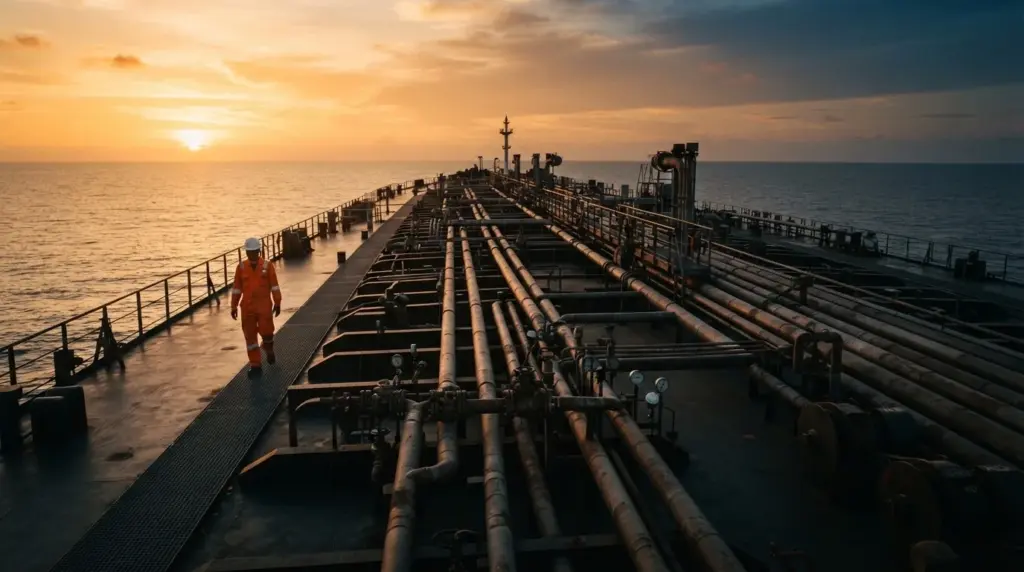
You cannot work with cargo on a tanker without a special certificate, commonly known as a tanker endorsement: officers and ratings with specific duties related to cargo must hold a certificate in basic training, while masters, chief engineer officers, chief mates, second engineer officers and everyone with immediate responsibility for cargo operations must hold a certificate in advanced training. There are three types of tankers — oil tankers, chemical tankers and gas carriers — and in Ukraine exactly five certificates of proficiency are issued for them, each valid for five years. On all three types, the advanced certificate is required for the same positions — from master to second engineer officer — and for everyone with immediate responsibility for the cargo.
Three Tanker Types, Five Certificates
The STCW Convention divides the documents as follows: for oil and chemical tankers there is one basic certificate covering both types and two different advanced ones; gas carriers form a separate branch with their own basic and their own advanced certificate. The Ukrainian Regulations on ranks follow the same grid: basic training for oil and chemical tankers, advanced for oil tankers, advanced for chemical tankers, basic for gas carriers, advanced for gas carriers. That is why there are six directions but five documents.
The basic oil/chemical certificate does not extend to gas carriers — gas starts from its own basic level. The reverse also holds: the advanced certificates for oil and chemical tankers require specifically the basic oil/chemical certificate.
Ratings receive the same five certificates under the Rules for the certification of ratings — Order No. 784. A separate document for a "pumpman (donkeyman)" is no longer issued: to work with cargo, ratings need a certificate of proficiency in special training.
Who Needs the Basic Certificate and Who Needs the Advanced One
Basic — everyone with specific duties related to cargo, both officers and ratings. Advanced — masters, chief engineer officers, chief mates, second engineer officers and everyone with immediate responsibility for loading, discharging, cargo handling and tank cleaning.
Part B of the STCW Code, its guidance part, defines a "person with immediate responsibility" as someone authorized to make decisions on loading, discharging, care in transit or handling of cargo, tank cleaning or other cargo-related operations. The same part recommends that all tanker personnel complete shipboard familiarization training before taking up their duties: regulations, health hazards, fire safety, pollution prevention, protective equipment, emergency procedures.
Basic Certificate: A Course Instead of Three Months at Sea
At the basic level, sea service can be replaced by a course. The conditions for oil and chemical tankers: basic safety training (BST) under section A-VI/1 plus either three months of approved seagoing service on tankers or an approved basic training course. For gas carriers it is the same: BST plus three months of service on gas carriers or an approved basic training course. The Ukrainian rules mirror this: three months of service on oil or chemical tankers or a basic training course; three months on gas carriers or a course.
The certificate is issued by the Administration, not by the training centre: the training institution issues a confirmation that one of the five types of training has been completed. To obtain the certificate, you submit a copy of your seafarer's identity document, a 3.5 × 4.5 photo, a copy of the confirmation from the training institution and copies of the pages of your service record book showing sea service, and for an advanced certificate — also a copy of the basic one.
Advanced Certificate: Three Conditions Joined by "And"
This is where it is easy to make a mistake: the conditions for the advanced level are joined by "and", not "or". For oil tankers, all three are required: a basic certificate; either three months of approved seagoing service on oil tankers or one month of approved shipboard training in a supernumerary capacity including at least three loading and three discharging operations, documented in a training record book; an approved advanced training course. For chemical tankers it is the same, but the service must be specifically on chemical tankers. For gas carriers — the basic gas certificate, three months on gas carriers or one month of supernumerary training with three loading and three discharging operations, and an advanced course.
Resolution No. 1499 repeats these conditions for each of the three advanced certificates.
A supernumerary position is not an ordinary voyage; Part B of the STCW Code, its guidance part, describes it this way: the trainee has no duties other than the training programme and emergency duties, keeps a training record book, and if three loading and three discharging operations have not been completed within the month, the period is extended.
What the Training Covers: Areas of Competence
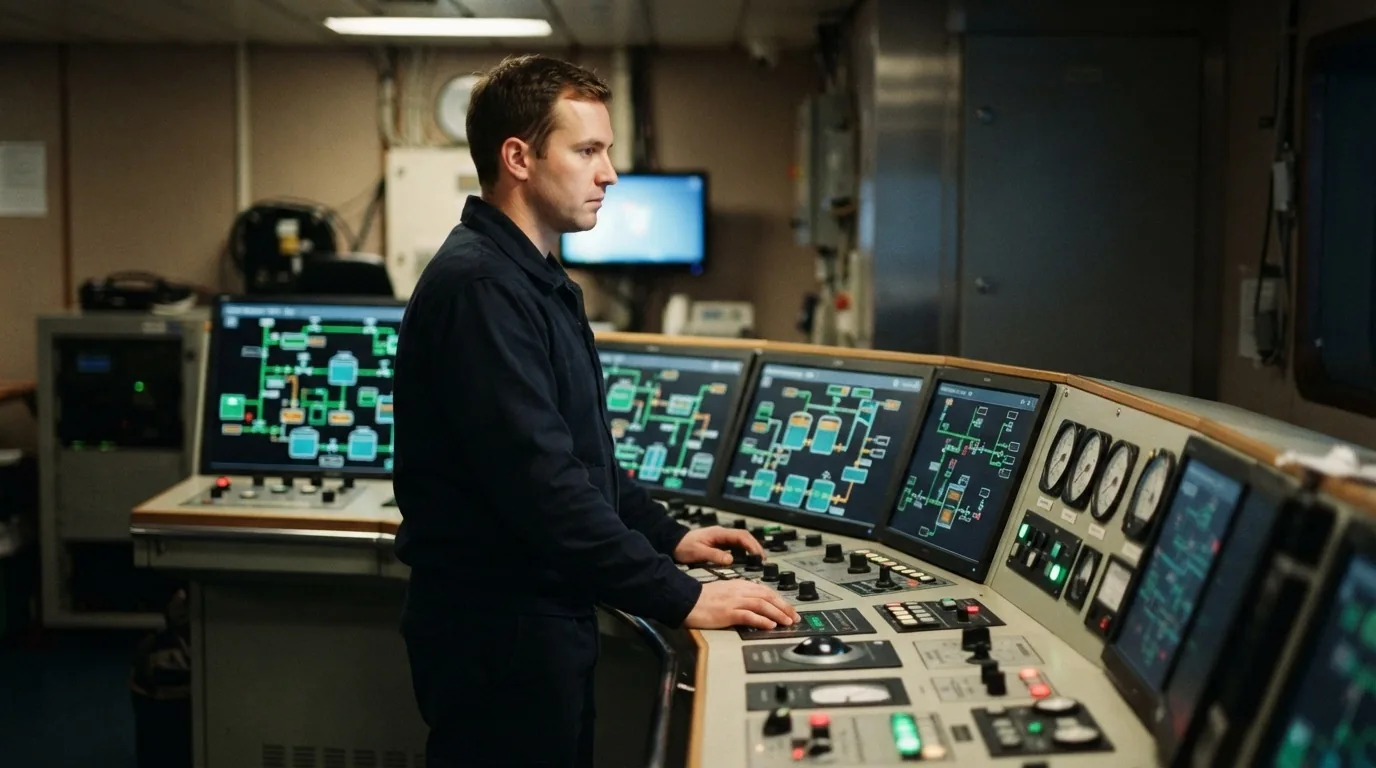
The standard of competence for the basic level and both advanced oil/chemical levels is set out in tables A-V/1-1-1, A-V/1-1-2 and A-V/1-1-3. Basic oil/chemical training covers six areas: contributing to safe cargo operations; taking precautions to prevent hazards; occupational health and safety; fire-fighting; responding to emergencies; preventing pollution from the release of oil or chemicals.
Advanced oil — seven areas: safely performing and monitoring all cargo operations; physical and chemical properties of oil cargoes; precautions to prevent hazards; occupational health and safety; responding to emergencies; preventing pollution; monitoring compliance with legislative requirements. Advanced chemical — also seven areas, with an emphasis on the reactivity, compatibility and categories of chemical cargoes and on the skills of using the IBC Code.
Gas is a different physics. Basic training for gas carriers covers six areas; among the specific hazards are extremely low temperatures and pressure, and among the actions in case of a spill is the prevention of brittle fracture. Advanced training — seven areas; the knowledge required includes reliquefaction systems, liquid and vapour phase calculations, the thermodynamics of liquefied gases, and the IBC and IGC Codes.
How Long the Certificate Is Valid and How to Renew It
In Ukraine, certificates of proficiency in basic and advanced training for oil, chemical and gas tankers are valid for five years. Under the Convention, masters and officers who continue to serve on tankers establish continued professional competence at intervals not exceeding five years. Competence is proven either by three months of tanker service during the preceding five years or by successfully completing an approved course. It is the same logic as for the general revalidation of certificates of competency under regulation I/11 — with medical fitness and proof of professional competence.
A bonus for the gas branch: a basic or advanced gas certificate counts as a basis for the basic IGF certificate — for ships using gas as fuel.
What Else Shapes Work on a Tanker
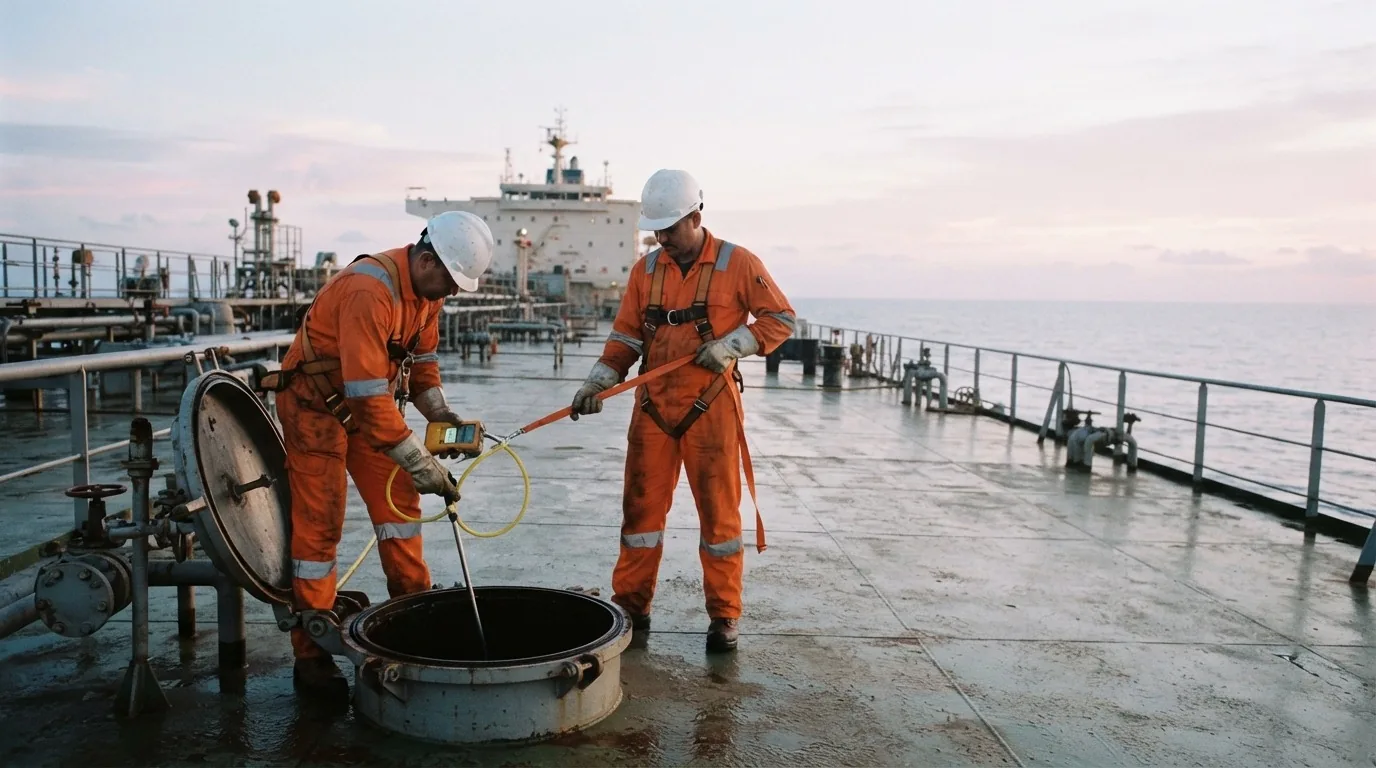
Besides the STCW Convention, there are industry guides and programmes for tankers. ISGOTT is the safety guide for oil tankers and terminals; its sixth edition was prepared by ICS, OCIMF and IAPH in June 2020, and the first edition came out in 1978. For chemical tankers, the counterpart is the ICS Tanker Safety Guide (Chemicals), sixth edition of April 2026, published since 1971; it turns the requirements of MARPOL Annex II into practical shipboard procedures.
SIRE is the OCIMF tanker inspection programme, launched in 1993; SIRE 2.0 is its digital version with a single protocol: pre-inspection data, the physical inspection, the report. It is a voluntary industry programme, a risk assessment tool for tankers used by charterers, ship operators and terminals.
MARPOL is the main convention on the prevention of pollution from ships; Annex I on oil and Annex II on noxious liquid substances in bulk entered into force on 2 October 1983, and the 1992 amendments made double hulls mandatory for new oil tankers. Ukraine acceded to MARPOL in September 1993, and the Convention has been in force for Ukraine since January 1994.
Six Directions: AVANT Courses
| Direction | Course at the AVANT training centre | Who needs it under the Convention | Entry |
|---|---|---|---|
| Basic — oil | Basic Oil Tanker Cargo Operations Course | officers and ratings with duties related to cargo | BST; a course instead of sea service |
| Basic — chemical | the same basic training page: one document for oil and chemical | officers and ratings with duties related to cargo | BST; a course instead of sea service |
| Basic — gas | Basic Gas Tanker Cargo Operations Course | officers and ratings with duties related to cargo on gas carriers | BST; a course instead of sea service |
| Advanced — oil | Advanced Oil Tanker Cargo Operations Course | masters, chief engineer officers, chief mates, second engineer officers, those responsible for cargo | basic certificate, sea service or supernumerary training, course |
| Advanced — chemical | Advanced Chemical Tanker Cargo Operations Course | the same positions on chemical tankers | basic certificate, service on chemical tankers or supernumerary training, course |
| Advanced — gas | Advanced Gas Carrier Cargo Operations Course | the same positions on gas carriers | basic gas certificate, sea service or supernumerary training, course |
In the site menu, the section on special training for certain types of ships lists five tanker courses: there is one basic course for oil and chemical tankers. Under the Regulations, the training institution issues a confirmation of completed training, and the certificate of proficiency is issued by the Shipping Administration.
Simulator and Additional Courses
These courses do not replace a certificate of proficiency. The courses Liquid Cargo and Ballast Handling on Oil Tankers, Liquid Cargo and Ballast Handling on Chemical Tankers and Liquid Cargo and Ballast Handling on Liquefied Gas Tankers are additional. The site also has a separate course, Liquefied petroleum gas (LPG) tanker cargo and ballast handling operations.
Three more narrow topics: Crude Oil Washing (COW) — crude oil washing is part of the knowledge in table A-V/1-1-2; the Inert Gas System and the H2S Safety Training Course for Seafarers. Among the centre's simulators is the Liquid Cargo Handling Simulator LCHS 5000. For the conditions, format, duration and programme, see the course pages.
Frequently Asked Questions
Do I need tanker sea service for the basic certificate?
Not necessarily: instead of three months of sea service, an approved basic training course is accepted — both under the Convention and under the Ukrainian Regulations.
Does the basic oil/chemical certificate allow me to work with cargo on a gas carrier?
No. Gas carriers are a separate branch with their own basic and advanced certificates.
Can I get the advanced certificate with a course alone?
No. All three conditions are required: a basic certificate, three months of service on tankers of that type or one month of supernumerary training with three loading and three discharging operations, and an advanced course.
How long are tanker certificates valid in Ukraine?
Five years — both basic and advanced, on all three types of tankers.
Choosing a tanker type means choosing a branch of documents for years ahead, so it is worth starting with the right basic certificate. The first step for both oil and chemical tankers is a single course — the Basic Oil Tanker Cargo Operations Course — at the AVANT training centre.
The document requirements on a specific ship are set by the flag state, the shipowner and the charterer.
Need to update documents or choose courses for a new contract?
Fill out the seafarer application — our specialists will help determine the required certificate package.
Or contact us directly:
Working hours:
Monday—Thursday: 9:00 AM to 5:00 PM
Friday: 9:00 AM to 4:00 PM
Saturday and Sunday — days off