
Women Seafarers in Shipping
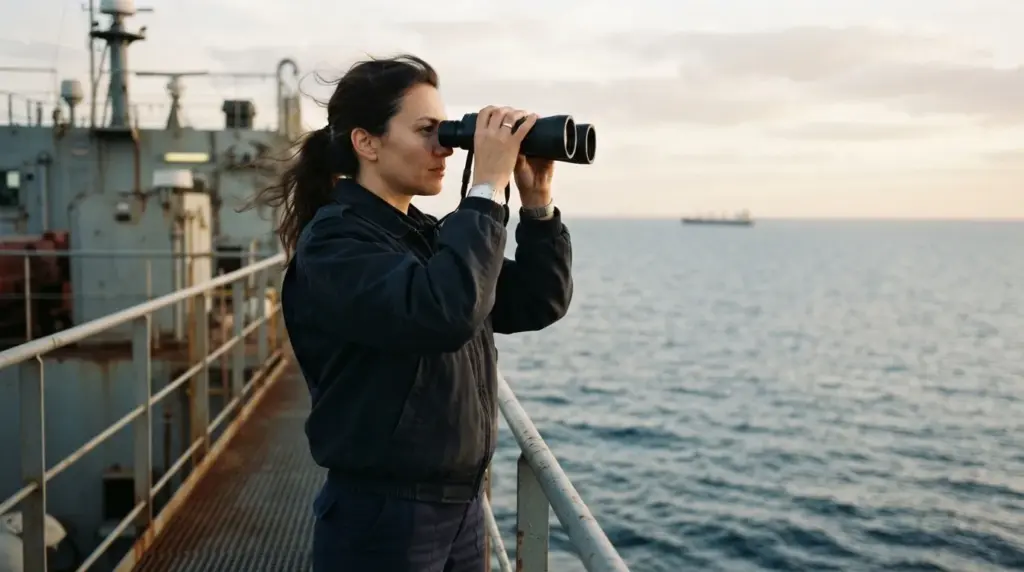
There is no legal ban on women in the seafaring profession, and a woman can become a seafarer by the same route as a man: the STCW Convention sets three conditions for a candidate for a medical certificate — an age of at least 16, proof of identity and meeting the health standards — and none of them concerns gender. After that the path is the same as for men: training, seagoing service, a certificate of proficiency. The difference lies not in the rules but in which way you enter and what you check about the ship before signing a contract.
How Many Women Work at Sea
Few — but still more than in 2015. According to the BIMCO/ICS Seafarer Workforce Report 2021 (BIMCO is the Baltic and International Maritime Council, ICS the International Chamber of Shipping), there are about 24,059 women seafarers worldwide — 1.28% of the STCW-certified workforce, which is 45.8% more than in the 2015 report. The same report shows where they work: women ratings mostly on cruise ships and passenger ferries, while women officers are spread more evenly across the sectors. The new BIMCO/ICS report of 2026 notes that the growth in the number of women seafarers is concentrated in officer positions, and the number of women ratings, according to most respondents, has stayed about the same.
The second figure comes from the IMO and WISTA survey (WISTA is the Women's International Shipping and Trading Association). It covers the states and companies that answered the questionnaire, not the whole industry. In the report on the 2024 survey (published in May 2025), women make up 1% of active seafarers in the surveyed companies — 2,223 out of 211,750 — and 5% of maritime cadets; the largest share of women seafarers in this sample was on bulk carriers and oil tankers. Across the respondents' maritime sector as a whole, including shore-based positions, there are 176,820 women — just under 19%.
What the STCW Rules Require
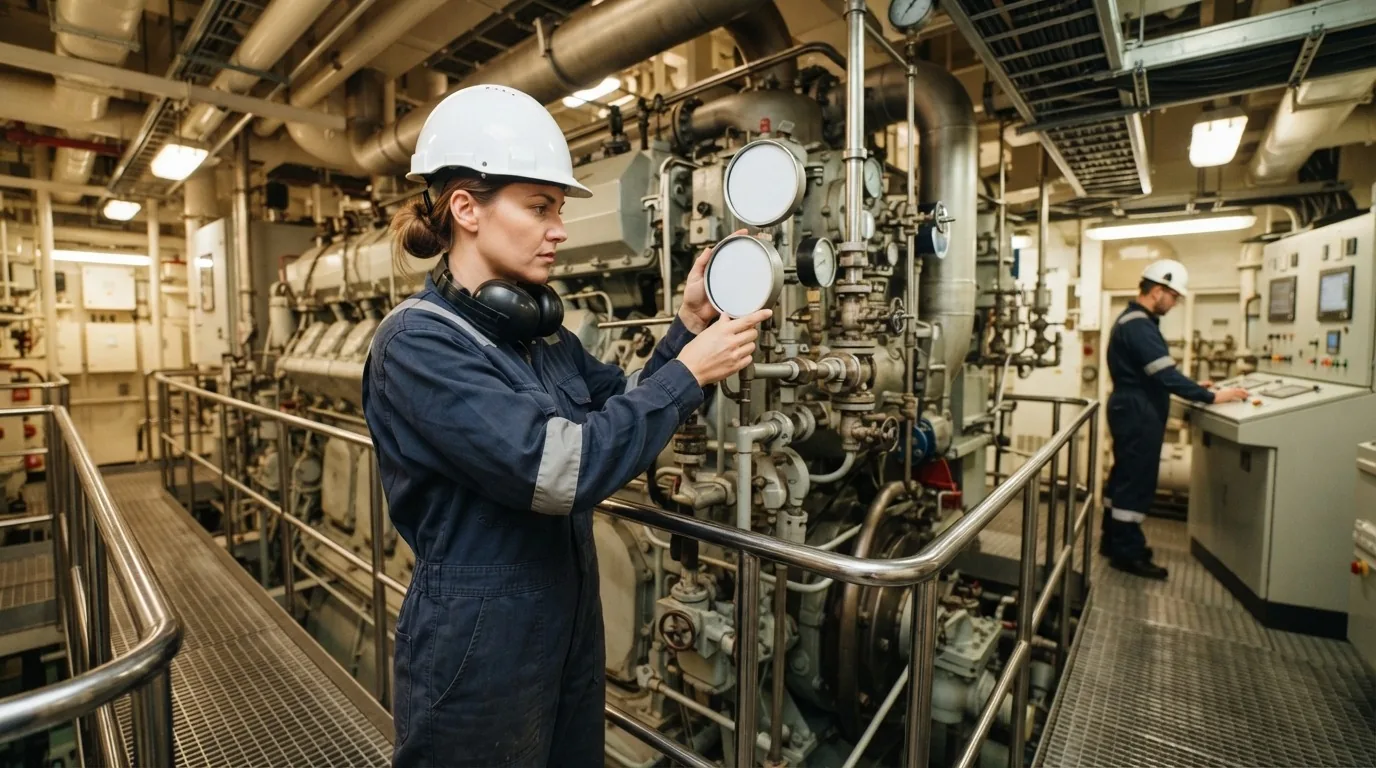
The Convention says "every candidate" — and that is where the subject of gender ends. For a certificate as a rating forming part of a navigational watch, STCW Regulation II/4 requires a candidate to be at least 16 years old, to have completed approved seagoing service of at least six months or special training ashore or on board that includes seagoing service of at least two months, and to meet the standard of competence in Section A-II/4 of the STCW Code. For an able seafarer deck under Regulation II/5 — at least 18 years old and at least 18 months of service in the deck department, or 12 months with approved training. A rating forming part of an engineering watch under Regulation III/4 — at least 16 years old, seagoing service or special training, standard A-III/4.
Basic training under Regulation VI/1 is taken by seafarers assigned safety or pollution-prevention duties on board, and this is exactly where something directly relevant to women appeared on 1 January 2026: Resolution MSC.560(108) added the prevention of violence and harassment, including sexual harassment, bullying and sexual assault, to the standard of competence in Table A-VI/1-4 — Personal Safety and Social Responsibilities. This training is the same for men and women — there is no separate "women's" course.
And what the Convention does not say. In the text of the Manila amendments, gender appears only as a field in documents — in the medical certificate and in the register of certificates; it is not among the conditions for obtaining certificates, so STCW does not distinguish candidates by gender, but it gives women seafarers no separate guarantees of equality either.
How It Works in Ukraine
There are two layers here, and they are often confused.
The first is the qualification requirements. Under the Rules approved by Order No. 784 of the Ministry for Communities, Territories and Infrastructure Development of Ukraine of 5 September 2023, a candidate for a certificate of proficiency as a rating forming part of a navigational watch must be at least 16 years old, hold a vocational qualification document as a seaman, have 2 months of seagoing service if the vocational training was full-time, or 6 months if it was completed while working, hold certificates of basic safety training and security-related familiarization, and hold a valid seafarer's medical certificate. Gender is not among the requirements — neither here nor in the other items of that section.
The second layer is labour law, and precision matters here. Article 174 of the Labour Code of Ukraine is still in force: it prohibits the employment of women in heavy work and work with harmful or dangerous conditions, and the list of such work is to be approved by the Ministry of Health. Until the end of 2017 such a list existed, and its section "26. Maritime transport" expressly named the engine and deck crews of ships of every type — from engineers and motormen to the boatswain and seamen of all grades. By Order No. 1254 of the Ministry of Health of 13 October 2017, this list was declared invalid (except for the chapter on mining work, which remains in force until the denunciation of the ILO Underground Work (Women) Convention (No. 45) is completed) in order to bring regulatory acts into line with the requirements of gender policy; the order took effect on the day of its official publication — 22 December 2017.
The general rule of the Code remains, but of the 1993 list only the chapter on mining work is in force — and it contains no maritime professions. So the statement "women in Ukraine are banned from working on ships" has been untrue since the end of 2017, and "there are no restrictions at all" is not accurate either. Ukrainian law separately sets maximum loads that women may lift and carry — 7 kg constantly during a shift and 10 kg when alternating with other work, up to twice an hour.
Medical fitness for work on seagoing ships in Ukraine is determined under the rules approved by Order No. 1793 of the Ministry of Health of 26 November 2025.
What MLC Says About Living Conditions and Safety on Board
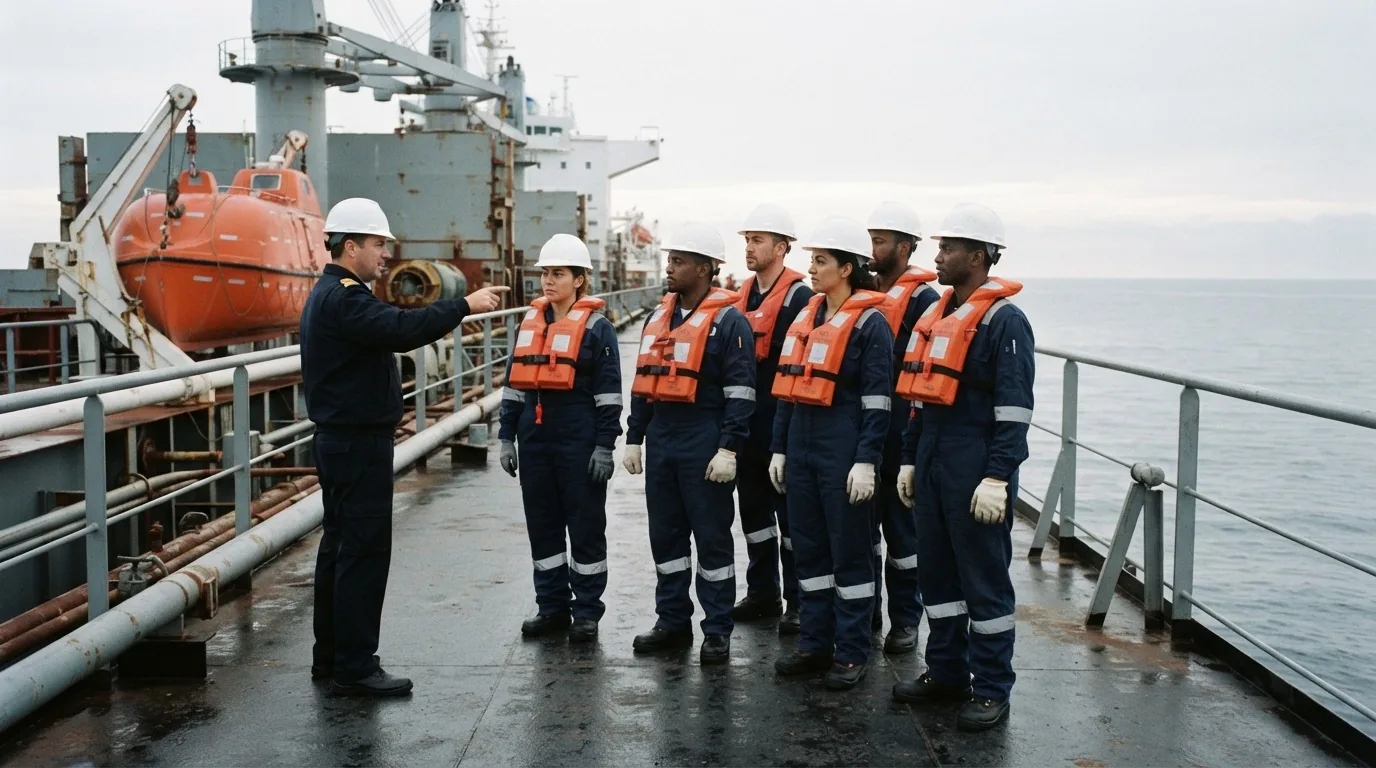
The requirements of the ILO Maritime Labour Convention, 2006 (MLC, 2006) apply on ships flying the flags of states that have ratified the Convention. The minimum age is 16, and night work by seafarers under 18 is prohibited. A ship must have separate sleeping rooms for men and for women. Separate sanitary facilities as well. However, the requirements of the Code of the Convention on ship construction and equipment apply only to ships built on or after the date the Convention came into force for the flag state; for older ships, the requirements of the earlier conventions on crew accommodation apply — to the extent the flag state applied them before. So whether there will be a separate cabin on a particular ship depends on the year it was built and its flag — and this is worth asking the crewing agency directly.
Personal protective equipment. The 2022 amendments to Standard A4.3 require that seafarers be provided with all necessary personal protective equipment of appropriate size. The word "women" does not appear in the rule, but if the standard set on board is too big for you, this is exactly the rule to refer to.
Harassment and bullying. The 2016 amendments added them to Guidelines B4.3.1 and B4.3.6 as an occupational safety and health issue and refer to the joint ICS and ITF (International Transport Workers' Federation) guidance on eliminating harassment and bullying on board ships. This is Part B of the Code of the Convention — non-mandatory guidance: it advises states rather than placing an obligation directly on the shipowner. The principle of equal pay for work of equal value for all seafarers on the same ship, without discrimination based on sex, is also a recommendation.
Which Way In
There are two ways into the profession, and they lead to different positions: maritime education leads to officer ranks, a vocational qualification to ratings. There are no gender requirements either in STCW or in Order No. 784 for ratings. How both routes work and which documents each requires is covered in the article on the two ways into the profession.
Deck or engine ratings. A certificate as a watch rating on deck or in the engine room, seagoing service; in the deck department the next step is able seafarer deck after 18 months of service or 12 months with approved training. For ratings, the AVANT training centre offers, among others, the Ordinary Seaman Training Course.
The cruise and passenger fleet. This is where, according to the ICS report, most women ratings work. For this field the AVANT training centre runs the "Cruise Ship Steward/Stewardess Training Course (Beginner)", the "Ship's Waiter Training Course (Grade 4)" and the "Ship's Cook Training Course (Grade 4)". For the conditions, format, duration and programme, see the course page.
For cooks there is one more detail in Order No. 784: for a certificate of proficiency as a ship's cook, either 3 months of seagoing service or 6 months of food preparation work in restaurant establishments is accepted. Restaurant experience counts.
Documents for Your First Voyage
Medical certificate: at least 16 years old, proof of identity, meeting the health standards set by the state. A certificate of basic safety training under Regulation VI/1 is mandatory for seafarers who perform safety or pollution-prevention duties on board. A certificate of security-related familiarization training and a vocational qualification document — under Order No. 784. Then comes a certificate of proficiency for the position and a contract through a crewing agency.
What a woman in particular should check in the contract: the ship's flag, the year it was built, whether there are separate rooms on board, whether the company has a procedure for responding to harassment, and whether protective equipment will be issued in the right size. Most of these points are backed by a rule or a recommendation of the Convention, so asking the crewing agency about them is appropriate.
Frequently Asked Questions
Is there a ban in Ukraine on women working as seamen or motormen?
No. The Ministry of Health list that until the end of 2017 barred women from deck and engine crews was repealed by Order No. 1254. The general Article 174 of the Labour Code on heavy and harmful work remains in force, but of the 1993 list only the chapter on mining work applies — and it contains no maritime professions.
Does a woman need a separate course?
No. Basic safety training under Regulation VI/1 is the same for everyone who takes it. Since 1 January 2026, its part on personal safety and social responsibilities has included the prevention of violence and harassment — and this part is the same for everyone who takes the training.
Will there be a separate cabin and bathroom?
On ships built on or after the date MLC, 2006 came into force for the flag state — yes: the Convention requires separate sleeping rooms and sanitary facilities for men and for women. For older ships, the earlier conventions on crew accommodation apply, so check the year the ship was built.
Where to start with no experience at all?
The training centre's courses include the Ordinary Seaman Training Course and the "Cruise Ship Steward/Stewardess Training Course (Beginner)".
Work at sea for women starts from the same catalogue as for men: the training centre has a separate area for passenger ship personnel as well as courses for deck and engine crews. Choose your way in from the AVANT training centre course catalogue.
Conditions on a particular ship are set by the flag, the contract and the collective agreement.
Need to update documents or choose courses for a new contract?
Fill out the seafarer application — our specialists will help determine the required certificate package.
Or contact us directly:
Working hours:
Monday—Thursday: 9:00 AM to 5:00 PM
Friday: 9:00 AM to 4:00 PM
Saturday and Sunday — days off